新型光纤传感器为页岩增产布“天眼”-石油圈
| 所在地区: | -- | 发布日期: | 2019年8月2日 |
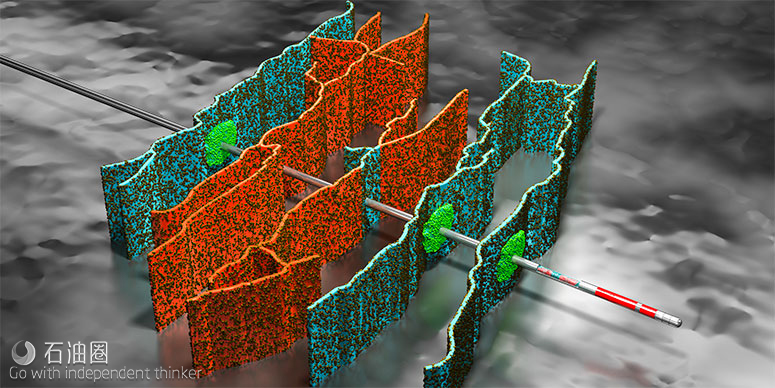
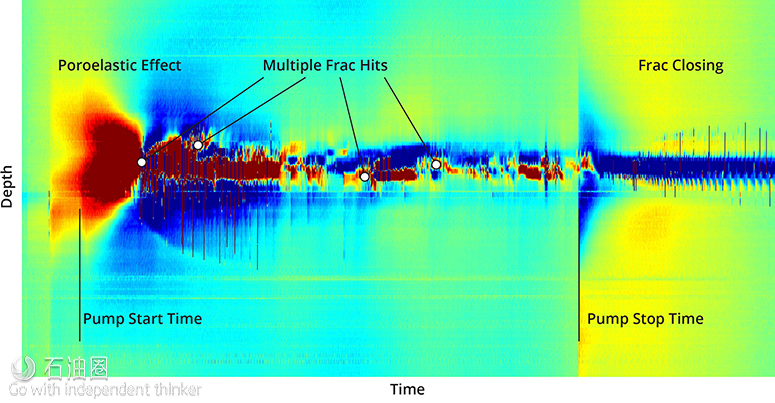
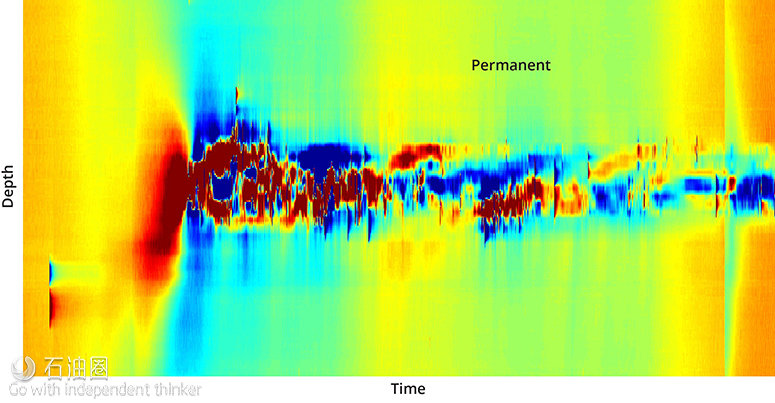
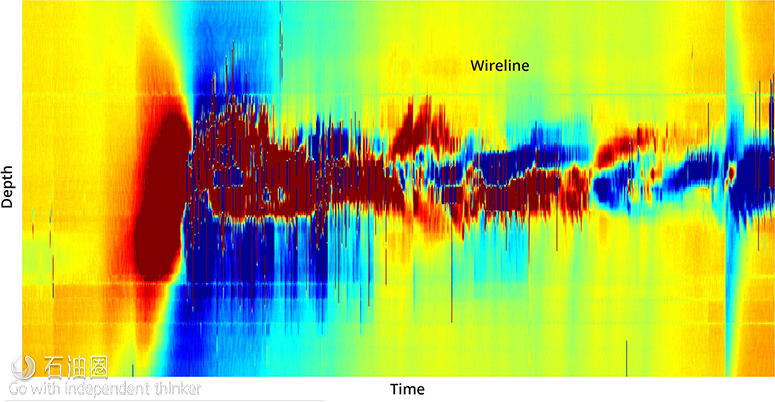
一种新型监测技术可实时定位微地震与应变事件。 编译 | TOM 影子 页岩油气的开采始终吸引着全球能源市场的目光,作业者们纷纷将重点聚焦于优化生产。为了优化增产作业与完井作业设计,并解决颇受关注的井间连通问题,作业者需要更多数据来深入了解油藏。实时评价增产效果与定量测量裂缝发育程度是开发页岩油气面临的最大挑战。 传统技术,例如测斜仪、微地震检波器阵列、化学示踪剂、压力传感器等,仅能提供有限的信息,因为它们受限于自身的覆盖面积。分布式声波传感器(DAS)系统与温度传感器已成功地用于监测水力压裂作业。然而,永久性光纤设备的复杂性与高成本,将会限制全面应用的油井数量。 高分辨率分布式声波传感器 为了克服这些挑战,Silixa公司发布了Carina XwellXpress,这是一种井间低频应变与微地震监测技术,可以利用电缆传输的测量数据实时定位微地震与应变事件,从而使作业者能够实时优化增产作业与完井作业设计。这项技术扫清了阻碍作业者实施诊断服务最具挑战性的障碍:高成本、缺乏实时数据以及作业干扰。 该技术的核心是Silixa公司的Carina分布式声波传感器。Carina传感器系统利用Constellation新一代光纤电缆来收集数据。与其他DAS系统相比,它的信噪比(S/N)提高了100倍,慢应变与微地震的低频范围提高了100倍以上。得益于Carina系统的高灵敏度,它可以检测到裂缝网络发育引起的低频应变变化,同时也可以检测微地震事件以及井间的压裂干扰。 实时压裂监测 井间应变的测量,特别是岩石力学或应变的孔隙弹塑性影响的测量,迄今为止,业内还没有干预电缆能够实现上述测量。这项新技术并不是基于测量的原理,而是利用建模与可视化处理,首次实现了对整个井眼的实时监测。 采用工程光纤的分布式声波传感器的可测量噪声,比标准光纤低100倍(20 dB)。此外,该分布式声波传感器的性能,可与10赫兹左右的地震检波器相媲美,远优于1赫兹以下范围内的地震检波器的响应。高灵敏度的低频应变测量,为储层内井间孔隙弹性构造的监测以及邻井中压裂干扰的检测,提供了有价值的数据。 Carina XwellXpress所使用的干预电缆可以部署到任何未进行增产作业的井中,并将其作为观察井。在水力压裂作业期间,作业者可以选择其中的某一口井来绘制井间应变图,定位微地震事件,并收集关键的地震数据,从而更好地理解完井设计以及实际裂缝形状的有效性。 光纤的现场部署 在多口非常规井中,建立了一套光纤的现场部署方案。其中两口井安装了永久工程光纤电缆,封固在套管外侧。然而业内逐渐认识到,获得更多的井间数据非常有助于深入了解井间干扰。而将新型工程干预电缆泵入至已完井的井中,则可实现上述功能。另外,该电缆还拥有一个单导体,用于井下牵引与/或在泵入过程中监测接箍。 永久电缆与干预电缆中记录的数据被实时地反馈到完井设计中,以优化当前井场的作业与未来的开发计划。 井间应变监测与压裂干扰描绘 利用该电缆采集了井间应变数据(图1)。可以清晰的观察到临界应变效应与作业过程,包括泵启动时间、孔隙弹性效应、压裂干扰、泵停止时间以及裂缝闭合。基于这些新数据,完井工程师即可绘制出裂缝的深度、方位以及速度,并可将该信息反馈到裂缝模型中,以验证与优化下一次作业的设计。 图1. 井间的色图描绘了基于时间与深度的应变(几个小时内,宽600米)。(来源:Silixa公司) 为了进一步验证干预响应,选择一口套管外侧封固有永久光纤电缆的井,然后将该电缆泵入井中。两条电缆的响应具有很强的相似性(图2)。 将压裂液泵入储层后,孔隙弹性效应引起的张拉应变与压缩应变逐渐增大,由此可以观察到多次压裂干扰。 图2. 将该干预电缆(下图)的低频应变数据与同一井(上图)套管外永久安装的电缆的数据(几小时内,宽300米)进行比较。(来源:Silixa公司) 微地震 水力裂缝监测的目的是绘制出作业对象的高度、长度、宽度与方位角。分布式声波传感器能够实现新的监测功能,可以很容易地将光纤电缆配置成为密集的、大孔径声波相控阵。随着最近的发展,该DAS在整个井筒中采集到的数据,已经能够与检波器相媲美。此外,在两口或更多的井中,光纤阵列只需利用到达时间即可确定震源,而不需要偏振建模与测量。沿着这条电缆都可观察到来自微地震的P波与S波到达。凭借测量的高灵敏度,在垂直剖面与水平剖面上都可以看到微地震事件,将之考虑到井眼轨迹的设计中,则能够获得更好的井位。 时移垂直地震剖面 时移垂直地震剖面(VSP)的一个主要功能是研究压裂作业与油藏枯竭对储层变化的影响。在这种情况下,Silixa记录了压裂作业期间每个压裂段获得的VSP数据。利用该技术,可以不断提高压裂设计的有效性与井平台的投资回报率。 得益于更高的信噪比,该技术能够以更少的扫描次数获得更高质量的数据。建立基准值,与压裂后以及投产后扫描到的数值进行对比,从而持续改进压裂作业。利用工程光纤进行DAS测量,意味着可以在各压裂段之间收集高质量的VSP数据,且不会干扰整体作业。 此外,高质量的微地震事件与4维VSP效应相关联,有助于了解裂缝的复杂性。 结论 与标准光纤相比,新一代DAS系统利用工程光纤,灵敏度提高了100倍,并在永久电缆与干预电缆上可提供前所未有的数据质量。 该干预电缆成本低廉,可用于压裂干扰、微地震监测、时移VSP采集的井间应变识别。该电缆的数据可与永久光纤的数据相结合,为压裂监测与完井诊断提供更广的覆盖范围。 将近乎实时的上述数据组合,输入到完井作业流程中,可以更好地了解关键作业决策,从而更具信心的优化完井作业。这些测量结果有助于更好地进行压裂设计、确定压裂顺序以及提高油藏的最终采收率。 A new monitoring service locates microseismic and strain events in real time. Conventional technologies, such as tiltmeters, microseismic geophone arrays, chemical tracers and pressure sensors, only provide restricted information—mostly due to their limited coverage.?Distributed acoustic sensor (DAS) systems and temperature sensors have been successfully used for monitoring hydraulic fracture operations. However, the complexity and costs associated with permanent fiber-optic installations would limit the number of wells that could be fully evaluated. High-resolution DAS To overcome these challenges, Silixa has released Carina XwellXpress, the crosswell low-frequency strain and microseismic monitoring service that locates microseismic and strain events in real time using wireline conveyed measurements, allowing operators to improve stimulation and completion designs on the fly. This service removes the most challenging barriers that keep operators from implementing diagnostic services: high costs, lack of real-time data and interference with operations. The service capitalizes on the performance of the company’s DAS, Carina, that has a 100x improvement in signal-to-noise ratio (S/N) and greater than 100x improvement in the lower frequency ranges of slow strain and microseismic compared to other DAS systems. As a result of the system’s sensitivity, it can detect changes in low-frequency strain induced by the development of the fracture network while simultaneously detecting microseismic events and crosswell frac hits. The system gathers data on a new generation of engineered fiber-optic cable called Constellation. Real-time frac monitoring The measurement of crosswell strain and, specifically, the poroelastic effect of rock mechanics or strain have not been measured to date with a wireline intervention cable. For the first time, this new service allows the monitoring of the entire wellbore in real time, enabling the visualization of effects modeled and understood but not measured. The measurable noise of a DAS with engineered fiber is 100x (20 dB) lower compared to that when using standard fiber. In addition, the DAS performance is comparable to that of geophones around 10 Hz but can far exceed the response of geophones in the range below 1 Hz. The highly sensitive low-frequency strain measurement provides valuable data for monitoring the crosswell poroelastic buildup within the reservoir and the detection of frac hits in the offset well. The intervention cable can be deployed into any well not being treated at the time, turning it into an observation well. Wells can be chosen during the hydraulic fracturing operation to map crosswell strain, locate microseismic events and collect key seismic data leading to a better understanding of completion design and effectiveness of the actual fracture geometry as pumped. Fiber field deployment A fiber field deployment was set up in unconventional multiple wells. Two of the wells were installed with a permanent engineered fiber cable cemented behind the casing. However, it was recognized that acquiring additional data between the wells can be valuable in understanding the crosswell interference. This was achieved through the use of a new engineered intervention wireline cable pumped down into an already completed well. The wireline cable also has a monoconductor for being tractored downhole and/or monitoring collars during the pump down. The data recorded both on permanent and intervention cables were fed into the completion design in nearreal time to optimize the operations on the current well pad and for future development plans. Crosswell strain monitoring and frac hits characterization The crosswell strain data (Figure 1) was acquired on the wireline. Critical strain effects and treatment processes, including pump start time, poroelastic effect, frac hits, pump stop time and fracture closure can be seen with clarity. These new data allow completion engineers to map the depth, azimuth and speed of the fractures and feed that information back into the fracture models to validate and optimize the designs for the next operation. To further validate the intervention response, the wireline cable was pumped down in the same well that has been instrumented with a permanent fiber behind the casing. A strong similarity can be observed in the response of both cables. Multiple frac hits can be observed following the tensional and compressional strain building up due?to the poroelastic effects as the fluid is pumped into the reservoir. Microseismic The objective in hydraulic fracture monitoring is to map the treated volume’s height, length, width and azimuth. A DAS enables the realization of new monitoring applications where the fiber-optic cable can be readily deployed as a dense, wide aperture acoustic phase-array in novel configurations. With recent advances, it is possible to collect data comparable to geophones across the entire wellbore simultaneously. Additionally, a fiber-optic array in two or more wells requires only arrival times for hypocenter determination, without the need for polarization modeling and measurements. Both P wave and S-wave arrivals from a microseismic event can be seen over the entire cable length. With the sensitivity of the measurement, events can be seen in the vertical section as well as the horizontal, allowing better location by taking into account the wellbore trajectory. Time-lapse VSP An important aspect of time-lapse vertical seismic profiling (VSP) is the effort to characterize the changes in the reservoir from the frac operations and reservoir depletion. In this case, Silixa recorded changes during frac activities with VSP data acquired after each frac stage. The effectiveness of the frac design and the return on investment for the pad can be continuously improved by using this technology. The increased S/N allows quality acquisition with fewer sweeps. The ability to establish baseline data that can be compared to post-frac and post-production sweeps allows the continuous improvement of the frac process. Improvements in DAS measurements utilizing the engineered fiber means that it is possible to collect high-quality VSP data in between stages without interfering with the overall operations. In addition, high-quality microseismic events can be correlated with 4-D VSP effects to help understand fracture complexity. Conclusion The next generation of a DAS system utilizing the engineered fiber offers 100x improvement in sensitivity compared to standard fiber and provides unprecedented data quality both on permanent and wireline intervention cables. The intervention wireline cable can be economically deployed for crosswell strain identification on frac hits, microseismic monitoring and time-lapse VSP acquisition. The wireline data can be combined with the permanently installed fibers to provide a wide volume coverage for fracture monitoring and completion diagnostics. Feeding in the combined near-real-time datasets into the completion workflow, a better understanding of the key operational decisions can be gained to optimize the completion process with a high level of confidence. These measurements lead to better frac design, sequencing decisions and better ultimate oil recovery from the reservoir.
While shale oil and gas production continues to captivate the global energy market’s attention, operators have their focus on optimized production. To improve stimulation and completion designs and deal with the growing concern of interwell communications, operators need data to gain insight into reservoirs. Evaluating stimulation performance in real time and quantitatively measuring the extent of fractures are the biggest challenges in shale play development.
按照客观、公正、公开的原则,本条信息受业主方委托独家指定在中国建设招标网 www.jszhaobiao.com 发布
注册会员 享受贴心服务
标讯查询服务
让您全面及时掌握全国各省市拟建、报批、立项、施工在建项目的项目信息。
帮您跟对合适的项目、找对准确的负责人、全面掌握各项目的业主单位、设计院、总包单位、施工企业的项目 经理、项目负责人的详细联系方式。
帮您第一时间获得全国项目业主、招标代理公司和政府采购中心发布的招标、中标项目信息。
标讯定制服务
根据您的关注重点定制项目,从海量项目中筛选出符合您要求和标准的工程并及时找出关键负责人和联系方式。
根据您的需要,向您指定的手机、电子邮箱及时反馈项目进展情况。