西门子完成海底电网的浅水测试-石油圈
| 所在地区: | 广东-- | 发布日期: | 2019年8月5日 |
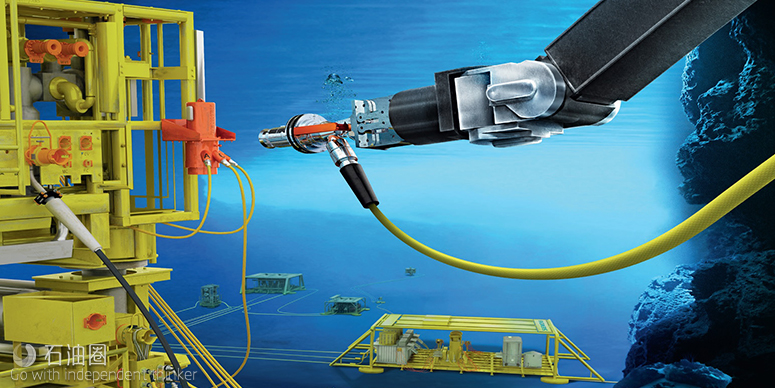
摘要:西门子在海底排兵布阵,以迎接即将到来的海底油田开发热潮,其海底电网系统顺利通过了浅水测试,不久将会面世。 编译:TOM 在挪威Trondheim海湾,西门子已成功完成其海底电网的第一阶段浅水测试。该公司正与合作伙伴雪佛龙、挪威国家石油公司、埃克森美孚以及埃尼挪威公司,协同开发一套突破性的系统,目前已处于项目的冲刺阶段。该系统将成为全球首个使用压力补偿技术的中压配电海底电网。 西门子海底业务主管Frode Tobiassen表示:“未来将有更多的海底压缩机、泵、加工设备,以及其他位于海床上的生产设施,所有这些都需要电力。我们不打无准备之战,目前为海底电网系统所做的一切,正是为了应对这一发展趋势。” 海底电网系统由海底变压器、海底开关设备、海底变速驱动器(VSD)、海底插拔式接头以及一套相当可靠的远程控制与监控系统组成,该监控系统拥有基于云端的用户仪表板以及数据分析功能。 未来,海底配电系统将在海底油田开发项目中发挥重要作用。海底电网结合多个海底用电设备,可实现海底的油气处理作业。该系统非常适合用于支持海底老油田以及回接油田的提高采收率作业,得益于对单相流或多相流的增压,可提高原油的采收率。 西门子在Trondheim试验现场进行了初始阶段的测试,该系统在满载情况下,以环形回路拓扑结构运行,并执行了预定的测试与验证程序。浅水测试的初步结果是积极的,所有设备都在其设计参数范围内运行。 与项目合作伙伴达成协议后,西门子将进入下一阶段,进行浅水的扩展测试,以积累作业经验,并验证该系统的长期可靠性。该公司的目标是在执行进一步系统测试的同时,累积3000小时的设备运行时间。 与此同时,该公司正紧锣密鼓的进行深水试点项目的筹备工作,计划将在海底油田安装与使用该系统。 该装置可为未来的海底油田提供充足动力,以支持大规模的海底处理作业,其作业水深高达3000米。 海底变压器 降压变压器是海底输电线路与配电系统之间的主要接口。作为用于泵电动机变速驱动器的密封、充液、压力补偿的变压器,它可以将电压降至常规用电设备的可用范围。而且,它仅需自然对流即可实现冷却,降低了维护需求。 作为西门子水下电网的主变压器,其总体设计确保了该水下变压器能够在较宽的功率范围内工作。电气设计基于传统的陆上配电变压器,但采用了效果更好的绝缘系统。所有的材料均已通过压力与流体兼容性的测试。此外,该设计已在浅水环境中进行了大量的测试。 该海底变压器具有集成的传感器与监控系统,可以无缝集成在西门子海底电力控制系统中。从而作业者可获得变压器完整性状态的连续显示,使作业者能够优化作业以增强安全性。 2012年,西门子海底变压器在Trondheim港浅水区域成功运行。在进行浅水测试来验证设计之前,所有变压器材料均已通过了压力与流体兼容性的测试。 技术特点:压力补偿;混合绝缘;坚固的外壳设计;优良的自然冷却能力;可生物降解且环保的MIDEL7131流体填充;柔性接口(干或湿式接头);先进的状态监测;可用作为海底增压的降压变压器;适用于3000米水深。 海底开关设备 海底开关设备采用模块化设计。它的主母线、插拔式连接器、测量用变压器都安装在充满流体与加压的基座模块中。 技术特点:采用真空断路器的模块化设计;充液的基座模块;压力补偿的母线段;面向更多用电设备的级联设计;对海水的渗透压力为零。 海底变速驱动器 变速驱动器(VSD)容错性强,具有多个拓扑结构,内置冗余组件,专为海底作业而设计。其充满流体的外壳与所有电力电子设备均可承受最高压力,从而降低了维护需求。 技术特点:模块化、紧凑型的压力补偿设计;100%自然冷却;具有内置冗余的多单元拓扑结构;高级单元旁路,以实现最大可用性;内置隔离变压器,确保西门子海底电网的安全运行;电机与电源均具有低谐波。 海底电力控制 海底电力控制系统是海底电网的一个非常重要的组成部分。它确保了海底配电中的几项重要功能: 1、将平台上控制系统的每条指令,直接传送到相应的海底控制模块; 通过海底电力脐带中的嵌入式光纤,可将海底电力控制系统与平台控制系统相连接。光纤端接,并连接至西门子海底电网的“大脑”,即海底电力电源控制装置(EPCU)。该控制装置负责处理命令与信息,并在本地生成正确的指令,再传输至各个海底模块,如变速驱动器与开关设备。所有数据流都通过以太网数据网络中的远程终端装置(RTU),实现了各设备间的相互传输。 1、可用性与可靠性高:系统在故障发生后仍然能够继续运行;模块化设计与先进的故障检测可缩短维修时间。 Siemens Subsea Power Grid Siemens successfully completed the first phase of its shallow water test of the Subsea Power Grid. The development program was conducted in collaboration with industry partners Chevron, Equinor, ExxonMobil, and Eni Norge. This will be the world’s first Subsea Power Grid for medium voltage power distribution using pressure compensated technology. Siemens has successfully concluded the first phase of its Subsea Power Grid shallow water test in Trondheim, Norway. Siemens, in collaboration with industry partners Chevron, Equinor, ExxonMobil, and Eni Norge, is in the final stages of a program to develop a barrier-breaking system that will become the world’s first Subsea Power Grid designed for distribution of medium voltage power using pressure compensated technology. “There will be more subsea compressors, pumps, processing plants, and in the future entire production facilities placed on the seabed, all of which require power,” said Frode Tobiassen, Head of Subsea at Siemens. “This development is what we are preparing for with the Subsea Power Grid system.” The Subsea Power Grid system consists of a subsea transformer, subsea switchgear, subsea variable speed drive (VSD), subsea wet mate connectors, and a highly reliable remote control and monitoring system that includes cloud-based user dashboards and data analytics. Subsea power distribution systems will play a major role in the future of subsea field development projects. The Subsea Power Grid is an enabling technology for subsea processing with multiple seabed power consumers. The system is ideally suited to support enhanced recovery in subsea brownfield projects and tie-back fields, benefitting from single- or multiphase boosting to increase oil recovery. During the initial test phase at Siemens’ test site in Trondheim, the system operated in a ring loop topology at full load and a predetermined test and verification program was performed. The initial results from the shallow water testing were positive and all units operated within their design parameters. In agreement with its program partners, Siemens will now move into the next phase with an extended shallow water test to build operational experience and verify long-term reliability. The goal is to accumulate 3,000 hours of runtime on the equipment while performing further system testing. In parallel, preparations are ongoing for a deep-water pilot program where the equipment will be installed and used on a subsea field. Powering installations on the seabed Enabling large-scale subsea processing by powering the subsea fields of the future – down to 3,000 meters. Subsea Transformers The step-down transformer is the main interface between the subsea transmission line and the power distribution. As a hermetically sealed, fluid-filled and pressure-compensated unit transformer for variable speed drive of pump motors, it enables step down to a wide range of consumers as well as longer step-outs. Its natural convection cooling reduces maintenance requirements. Optimized as the main transformer for Siemens Subsea Power Grid, the generic design can be used on subsea distribution transformers in a wide power range. The electrical design is based on traditional onshore distribution transformers, but with an enhanced-efficiency insulation system. All materials have been tested for pressure and fluid compatibility in an extensive qualification program. In addition, the design was verified with an extensive test in shallow water. The subsea transformer has an integrated sensor and monitoring system that can be seamlessly integrated in the Siemens subsea power control system. This provides the operator with a continuous display of status of transformer integrity and the ability to optimize operations for enhanced safety. In 2012, the Siemens Subsea Transformer was successfully operated in shallow water in Trondheim harbor. All transformer materials were tested for pressure and fluid compatibility in an extensive qualification program before the design was verified with the test in shallow water. Technical data Pressure-compensated Subsea Switchgear The subsea switchgear has a modular design. Its main bus bars, wet-mate connectors and measuring transformers are housed in the fluid-filled and pressurized base module. Technical data Modular design with vacuum circuit breakers Subsea Variable-Speed Drive (VSD) The variable-speed drive (VSD) features a fault-tolerant multi-cell topology with built-in component redundancy. Designed specifically for sea floor operation, its fluid-filled enclosure and all power electronics can be exposed to full pressure, thereby reducing maintenance requirements. Technical data Modular and compact pressure-compensated design Subsea Power Control The Subsea Power Control system is a very important component of the Subsea Power Grid. It ensures several important functions in the subsea power distribution: Direct transfer of every command given in the topside control system to the respective subsea control module, Transparent communication of status and information from the respective subsea modules like variable-speed drive (VSD) and switchgear to the topside control system, Delivery of standardized interfaces (e.g. SIIS to other subsea application like sensors and/or pump systems). Delivery of a transparent communication channel from topside all the way to the subsea variable-speed drive (VSD). This enables configuration of the VSD, update of VSD software, as well as diagnostics and service being done the same way as with a topside VSD. The Subsea Power Control system is connected with topside control via an embedded fiber in the subsea power umbilical. The fiber is terminated and connected to a subsea electronic power control unit (EPCU) – the “brain” of the Siemens Subsea Power Grid. This controller unit processes commands and information, and generates the correct commands locally to the respective subsea modules like variable-speed drive (VSD) and switchgear. All data flow subsea is sent to and from the respective units via a remote termination unit (RTU) in an Ethernet data network. The subsea power control system is built up as a redundant system with retrievable units. Control challenges High availability and reliability Control and monitoring system advantages Flexibility Increased grid life time Lower engineering and maintenance costs Higher availability
2、将各个海底模块的状态与信息,如变速驱动器(VSD)与开关设备,透明传输至平台的控制系统;
3、提供标准化接口(例如SIIS连接至其他海底设备,如传感器和/或泵系统);
4、提供从平台至海底变速驱动器(VSD)的透明通信通道。这使得海底VSD的配置、VSD软件的更新以及诊断和服务的执行方式,完全与平台上的VSD相同。
2、灵活性与可扩展性高:可轻松为多种拓扑重新配置系统;系统可以自动运行。
3、分布式组件的相互协调。
4、命令与故障的快速响应。
5、大量(不同的)接口。
6、延长电网使用寿命,可以调整作业以延长组件寿命。
7、降低工程与维护成本:标准接口降低了接口的安装成本;可以预测剩余寿命,方便制定维护计划;可以延长保养周期,在需要的时候才进行维护。
Hybrid insulation
Robust enclosure design with optimized natural cooling properties
Biodegradable and environmentally-friendly MIDEL 7131? fluid filling
Flexible interfaces (dry or wet-mate connections)
Advanced condition monitoring
Also suitable as a step-down transformer for subsea boosting
Qualified for 3,000 meters water depth.
Fluid-filled base module
Pressure-compensated bus bar base section
Cascadable design for more consumers
Zero differential pressure at all penetration to seawater
100 % natural cooling
Multicell topology with built-in redundancy
Advanced cell by-pass for maximum availability
Built-in isolation transformer ensures safe operation in Siemens’ Subsea Power Grid
Low harmonics both to motor and to supply
Flexible size and scalability of grid
Coordination of distributed components
Fast response to commands and failures
High number of (different) interfaces
System can easily be reconfigured for many different topologies
System can operate autonomously
Operation can be adapted to increase component life time
Standard interfaces reduces interface engineering costs
Remaining life time can be predicted so that maintenance can be planned
Service intervals can be extended to when maintenance is needed
System can continue to operate after faults, either at full or reduced performance
Modular design and advanced fault detection will reduce repair time
按照客观、公正、公开的原则,本条信息受业主方委托独家指定在中国建设招标网 www.jszhaobiao.com 发布
注册会员 享受贴心服务
标讯查询服务
让您全面及时掌握全国各省市拟建、报批、立项、施工在建项目的项目信息。
帮您跟对合适的项目、找对准确的负责人、全面掌握各项目的业主单位、设计院、总包单位、施工企业的项目 经理、项目负责人的详细联系方式。
帮您第一时间获得全国项目业主、招标代理公司和政府采购中心发布的招标、中标项目信息。
标讯定制服务
根据您的关注重点定制项目,从海量项目中筛选出符合您要求和标准的工程并及时找出关键负责人和联系方式。
根据您的需要,向您指定的手机、电子邮箱及时反馈项目进展情况。