挑战业内常规的油气井诊断方法-石油圈
| 所在地区: | 吉林-- | 发布日期: | 2019年8月7日 |
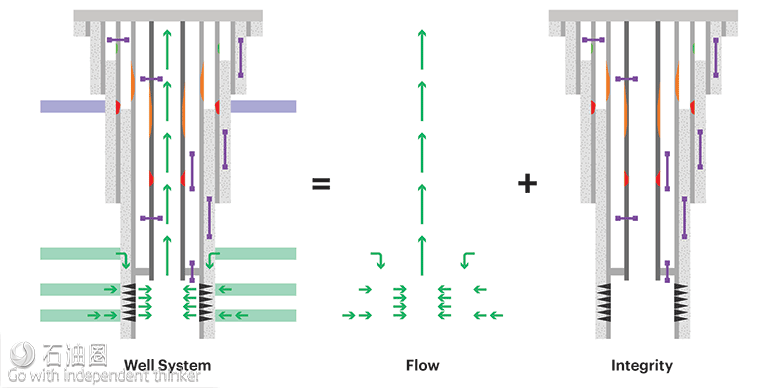
摘要:Chorus工具是Chorus诊断平台的一部分,它可以显示整个油气井系统的流动,因此作业者可以利用这些信息来提升油气井系统的性能。 编译:大安 TOM 油气井需要更好的性能与更长的寿命。作业者渴望提升油井的产量,然而这需要依靠油田服务公司的聪明才智,才能更有效地做到这一点。在现今的经济环境下,我们有责任挑战旧的思维方式,大胆创新,使客户能够获得更多的价值,更轻松地应对业绩方面的挑战。 一种新的思维方式 就像融入地球的巨大工业管道系统一样,油气井的建造也使用了极其复杂的管道、屏障与水泥的组合,其中大部分组件都围绕着一个中央生产管道。这两者的目的都很明确,就是安全、有效、盈利地运输有价值的液体。 不幸的是,这并不是一个完美的世界,自然力量会破坏油气井的正常生产作业。尽管人类拥有聪明才智,但在大自然面前却不堪一击,因此油气井会不可避免地发生异常或停产。油气行业关注的重点一直都是井与油藏。翻开书本,对油气井的常规定义与诊断都倾向于利用完井作业将井与油藏隔离。然而,这两者存在密不可分的联系,它们不应当被分开,因为它们是一个整体。 因此,需要对油气井进行新的定义,一个能够识别完井与油藏的性能属性、两者之间的相互作用以及整个系统动态的定义。油气行业面临的不仅仅是一口井,而是油气井系统。该行业还需要认识到所有油气井系统两个最重要的性能因素:流动与完整性。 流动代表着正确的流体流至正确的地点,而完整性则是确保该过程可在不打折扣的情况下顺利进行。因此,有效管理油气井系统的性能,意味着管理流动与完整性。 事实上,油气井系统的合理诊断存在挑战性。油气井系统内的每个角落都存在流动与完整性风险:井筒之外,多层套管至油气井系统的外部,以及储层本身。因为这些地方几乎无法部署诊断传感器。 传统的诊断方法不能给出所有答案,因为它们要么看得不够远,要么无法测量正确的东西,它们不着眼于大局。发生的异常情况,例如活跃的漏失层、层间窜流、持续环空带压的源头,都潜伏于屏障后面,根本无法用常规技术进行诊断。 图1 油气井系统的定义范围为人工完井至油藏,也包括油藏。(资料来源:TGT) 创建一个新类别 只有通过对井眼内部作业及井眼以外的因素进行评估,才能正确理解和管理流动与完整性,从而提高油气井系统的性能。穿透屏障诊断的概念适用于所有井,是判别油田类别重要的新基础。 “穿透屏障感知”的诊断工具已经问世了几十年,但这些工具主要着眼于调查储层性质,例如基岩与流体参数,或者用于评估固井质量。 穿透屏障诊断作为一个新类别,业内需要正视并推进该技术,以更加全面与不妥协的方式评价油气井系统。若拥有一双火眼金睛,能够看清井筒内至储层的所有信息,就可比以往任何时候都更容易发现问题。从整体上观察油气井系统,可以为作业者描绘一幅完整的井况图,包括流动与完整性。此外,有了更好的洞察力,作业者即可做出更好的决策,以保持整个系统更高效的运行。 诊断工具与系统 维持安全、高产、盈利的生产作业,意味着所有油气井系统都需在某个时刻进行诊断干预,无论是常规监测,亦或是针对特定问题。 当涉及到诊断技术时,工具往往会主导油田会议、技术论坛与采办实践,作业重点也往往是在井中下入工具。如果油气井系统出现意外的出砂、无效的增产措施或压裂、或持续的环空带压,作业者就会委托服务公司部署某个工具,他们相信利用工具即可获得所有答案。然而现实并非如此简单。 单独而言,工具提供了原始数据与测量结果,但揭示油气井系统的真实情况,需要的不仅仅是工具。工具的灵敏度与准确度非常重要,但除此之外,还有许多其他因素对整体诊断结果也有贡献。 协同作用发生在该服务的所有方面,而不仅仅是工具。该诊断程序成功激活了油气井,其中,获取数据的方法、处理和建模以改进与扩展原始数据的方法、以及用于数据分析与解释的专业知识,这些都起着至关重要的作用。所有这些因素的共同努力才会产生诊断结果与见解,从而形成一套由专家策划与应用的完整诊断系统。 毫无疑问,业内应不断推动诊断技术的发展以应对当今挑战。这意味着,需要从仅依靠工具,发展为涉及各个方面的诊断系统。然而,这还需要更进一步。 从系统到产品 作业者最终还是看重解决问题的答案。他们都想要确保使用合适的诊断系统,但购买决策往往还取决于诊断结果的清晰度与完整性,因为这是诊断工作流程的最终目标。 考虑一口井突然出现流动问题,例如含水量的急剧增加,或复杂的完整性问题,例如水泥环的持续带压。在这些情况下,作业者更关心的是得到一个可以信任的答案来解决这些问题,而不是使用什么工具或系统。 Hegazi说:“以应用为主导的’产品’方法与传统的’工具’方法相比,前者可以提高产品选择与商业的灵活性,使作业者在这两方面都能获益。作业者肯定更欣赏技术,但他们最终寻求的是准确的诊断结果,以帮助他们做出更好的决策。” 他补充道:“应该采用一种机制,其中更简单的产品,例如诊断井筒流量,只需更少的资源、更少的创新、更低的价格。而更多复杂的产品,例如多重屏障诊断,其背后的研发工作耗费数年时间,则需要更多的资源,最终可提供更多的价值,自然会索求更高的价格。” 光明的未来 旧思维无法应对今天的新挑战。随着油气井系统变得越来越老,越来越复杂,性能管理仍将是优先事项,并继续成为业界的任务。这就是为什么有必要在所有层面都进行创新,研发更好的工具,创建更好的诊断系统,并与专家相结合,以强化这些系统的能力。业界需要认识到流动与完整性的双重重要性,它们是资产性能的关键推动者,而穿透屏障诊断技术则是了解油气井真实情况的唯一方法。最终,需要采用以产品为主导的采购方法,其中诊断结果才是王道,而不是工具。做到这一切,前途就会一片光明。 Challenging The Industry’s Approach To Well Diagnostics The Chorus tool, part of the Chorus diagnostic platform, reveals flow throughout the well system so the operator can use the information to elevate well system performance. (Source: TGT) When oil prices fell in 2014, E&P companies were forced to tighten capital budgets, reduce activity levels and drive down costs. The ensuing stampede to cost reduction hit upstream oilfield service companies extremely hard. Today, with the oil price stabilizing, operators are more inclined to push their assets harder to produce more. However, when budgets were slashed, planned maintenance and workovers were among the first to be cut or deferred, while still treading the line not to compromise on safety. Securing asset reliability is still a top priority, ensuring that wells perform at full capacity while safeguarding life and the environment. “Wells need to perform better and last longer,” TGT CEO Mohamed Hegazi said. “Operators need to elevate well performance and need the ingenuity of oilfield service companies to do this more effectively. In today’s economic climate, we have an obligation to challenge the old way of thinking by being bold and innovative so that customers can capture more value and address well performance challenges more readily.” For all asset managers, a key area of vulnerability lies in the happenings thousands of meters away from the surface—downhole. A new way of thinking Like a giant industrial plumbing system fused into the earth, wells are built using a fantastically complex assembly of tubes, barriers and cement, most of which exist around a central producing conduit. Their sole purpose is to transport valuable fluids safely, productively and profitably. Unfortunately, it is an imperfect world where natural forces conspire to undermine the perfect functioning of the well, and despite the ingenuity of man, the well will inevitably misbehave or fail. Naturally, the industry is focused on wells and reservoirs. However, conventional definitions and diagnostics of the well tend to isolate the well completion from the reservoir, and yet the two are so inextricably linked they should never be separated because they work as one. Therefore, a new definition of the well is needed, one that recognizes the performance attributes of the completion and the reservoir it connects to, the interplay between the two and the dynamics of the entire system. What the industry is dealing with is not just a well; it is a well system. The industry also needs to recognize the two most vital performance factors of all well systems—flow and integrity. Flow is about the right fluids connecting to the right places, and integrity makes sure that happens without compromise. So, managing well system performance effectively means managing flow and integrity, and not much else matters. “Diagnosing well system performance is challenging,” Hegazi said. “Flow and integrity issues can exist anywhere within the well system: beyond the wellbore, behind multiple casings to the outer reaches of the well system and in the reservoir itself—a place virtually impossible to deploy diagnostic sensors.” Conventional diagnostics can’t provide all the answers because they either do not look far enough or don’t measure the right things; they do not look at the big picture. Rogue happenings, such as active thief zones, crossflow or the source of sustained annulus pressure lurk behind barriers and would not be diagnosed with traditional techniques. TGT The definition of the well system includes the man-made well completion up to and including the reservoir. (Source: TGT) Creating a new category Flow and integrity, and therefore well system performance, can only be properly understood and managed by assessing more than the inner workings of the wellbore. This concept is the foundation of a new and important oilfield category applicable to all wells, through-barrier diagnostics. Diagnostic tools that “sense through barriers” have existed for decades and overlap into this category, but apart from a few exceptions, these have been primarily concerned with investigating reservoir properties, such as matrix and fluid parameters, or evaluating cement. Acknowledging and advancing through-barrier diagnostics as a new category offers a look at the well system in a far more holistic and uncompromising way. The ability to see through multiple barriers from the wellbore into the reservoir and everything in between reveals more than ever before. Viewing the well system in its entirety provides operators with a complete picture of the goings on, both flow and integrity related. Moreover, equipped with better insights, operators are much better placed to make the right decisions to keep the entire system working harder. Diagnostic tools versus systems Maintaining safe, productive and profitable operations means that all well systems at some point will require diagnostic intervention, either for routine monitoring or to target a specific issue. When it comes to diagnostics, tools tend to dominate oilfield conversations, technical forums and procurement practices, and the operational focus tends to be on running the tool in the well. If a well system is experiencing unexpected sand flow, ineffective stimulation or fracturing, or sustained annulus pressure, the operator commissions a service company to deploy a certain tool in the belief that the tool itself will provide all the answers. The reality is not that simple. In isolation, the tool gives raw data and measurements, but revealing the truth about the well system requires more than the tool. The tool’s sensitivity and accuracy are extremely important, but many other factors beyond it contribute to the overall diagnostic result. The synergy happens in all facets of the service, not just the tool. The diagnostic program activates the well, the method for acquiring the data, processing and modeling to refine and expand raw data, and the expertise in analysis and interpretation, which all play a vital part. The results and insights materialize from the combined effort of all these factors—an entire diagnostic system, curated and applied by human experts. There is no doubt that advancing diagnostics to deal with today’s challenges means evolving from tools to diagnostic systems on all fronts. However, there is a need to go one step farther. From systems come products Consider the case in which a well suddenly exhibits flow issues, such as a dramatic increase in water cut, or complex integrity issues, such as sustained pressure in the C-annulus. In this case, the operator is more concerned about getting an answer it can trust to solve these issues, not what tool or system to use. “An application-led ‘products’ approach versus a traditional ‘tools’ approach allows for improved product selection and commercial flexibility, benefiting operators on both counts,” Hegazi said. “Operators certainly appreciate technology, but they are ultimately seeking diagnostic answers that can help them make better decisions.” He added, “A mechanism should be adopted where simpler products, such as diagnosing wellbore flow, demand fewer resources and less innovation commands a lower price. Whereas more complex products, like multibarrier diagnostics, that have years of research and development behind them, demand more extensive resources and ultimately deliver more value, [and] naturally command a higher price.” A bright future The old thinking cannot answer today’s new challenges. As well systems become older and more complex, managing performance will remain a priority and continue to task the industry. That is why there is a need to innovate on all levels, by building better tools and also creating better diagnostic systems and recognizing the experts that empower them. The industry needs to acknowledge the dual importance of flow and integrity as the key enablers for asset performance and the criticality
What the operator ultimately needs is answers. There is an interest in making sure the right diagnostic system is utilized, but the purchasing decision should be ultimately based on the clarity and completeness of the answer because this is the final product in the diagnostic workflow.
of through-barrier diagnostics as the only means to see the true picture. Finally, the need exists to adopt a product-led approach to procurement, where the answer is king and not the tool. Do all that, and the future looks bright.

按照客观、公正、公开的原则,本条信息受业主方委托独家指定在中国建设招标网 www.jszhaobiao.com 发布
注册会员 享受贴心服务
标讯查询服务
让您全面及时掌握全国各省市拟建、报批、立项、施工在建项目的项目信息。
帮您跟对合适的项目、找对准确的负责人、全面掌握各项目的业主单位、设计院、总包单位、施工企业的项目 经理、项目负责人的详细联系方式。
帮您第一时间获得全国项目业主、招标代理公司和政府采购中心发布的招标、中标项目信息。
标讯定制服务
根据您的关注重点定制项目,从海量项目中筛选出符合您要求和标准的工程并及时找出关键负责人和联系方式。
根据您的需要,向您指定的手机、电子邮箱及时反馈项目进展情况。