一款能优化电潜泵作业的仪表-石油圈
| 所在地区: | 吉林-- | 发布日期: | 2019年8月23日 |
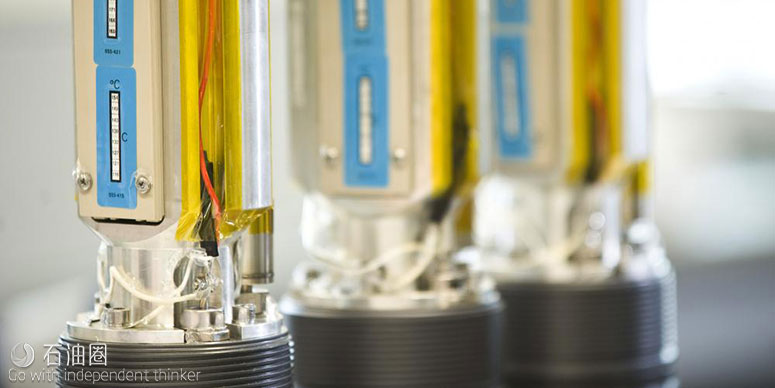
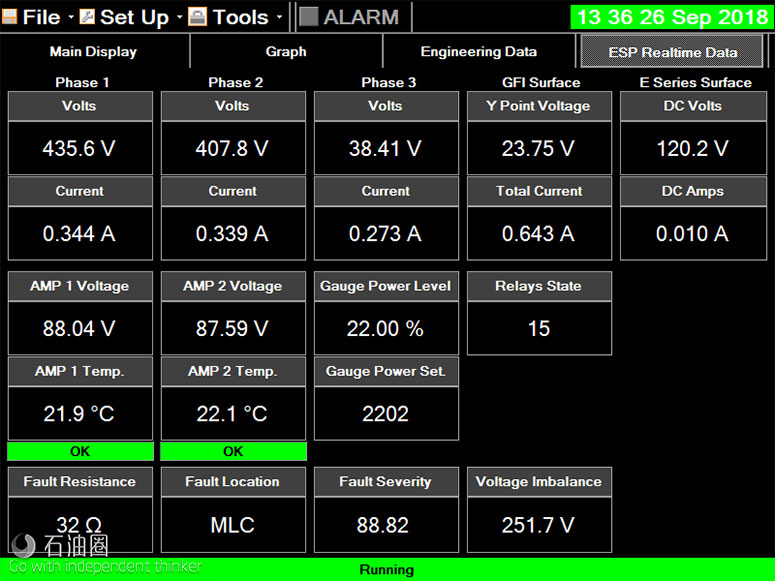
ESP仪表有助于避免监控系统故障 如今大宗商品的价格波动频繁,油气公司亟需优化油田作业,发挥出开采设备的最大价值。例如,只有稳定、实时地获取井下泵与井况数据,才能使电潜泵(ESP)系统处于最佳正常运行状态,从而获得更多产量。通过将先进的井下传感器与实时诊断相结合,油气行业正在向数字化转型,作业者期望能够以更低的举升成本提高产量。 回望过去,数据传输无法保持稳定,通常是受到井下ESP系统电气干扰或故障的影响。15%的生产井由于接地故障而无法通过ESP电缆,将井下仪表测出的泵数据传输至井口,从而导致数据的通信中断。虽然ESP可能还在运行,但数据传输的中断意味着,无法对压力、液位、温度进行深入了解。 在没有井下数据的情况下,作业者将面临两种方式:1)进行全面修井以回收与更换ESP,或者2)继续运行该系统,但可能会降低泵速,以防止电机过热与停机。与安装了井下仪表的泵相比,由于接地故障导致的数据丢失,可能会造成高达25%的产量下降。 接地故障导致的数据丢失,是Baker Hughes开发Zenith避免接地故障(GFI)ESP仪表的动机。该仪表采用独特的电源与通信系统来保护高价值数据,即使在ESP系统发生电气故障时亦是如此。 协同开发 Baker Hughes与一家中东作业者合作开发出Zenith GFI ESP仪表。该公司安装了大量ESP系统,拥有丰富的接地故障经验,因此需要一款仪表,来改善现场所有ESP对井下数据的获取,以帮助提高产量。 在现场测试中,新仪表成功地在多个模拟故障中恢复了数据。安装一年后,系统进行了进一步的测试,成功地记录了所有数据,并可向作业者实时提供井下信息。 GFI软件重点关注三相电力系统的不平衡,故障电阻为32欧姆,故障发生在电机引线的连接处,故障严重程度为88.82%。(来源:BHGE) 自早期原型测试以来,大约50台Zenith GFI ESP仪表已安装在泰国、中东、非洲和拉丁美洲的各种变速驱动系统、交换机驱动器与泵上。除了标准参数外,GFI系统还可以在油井与泵的全寿命周期内,连续监测ESP电力系统与电缆。作业者正在研究这项技术,用以帮助实现ESP故障的实时电气诊断与预测,并利用这些新信息,确定出故障的根本原因,从而延长ESP的运行寿命。 此外,GFI系统还可精确定位油井中电缆故障的位置以及严重程度,从而对有问题的泵送系统做出明智的决策。当ESP发生故障时,由于高速数据仍然可用,停泵期间,作业者可获取储层的压力恢复数据,否则,若采用传统测量技术,这些数据就会丢失。 吸取经验教训 自首次试验与安装以来,Zenith产品开发团队的仪表专家,利用测试结果和早期现场经验来增强该系统,以扩大其适用范围。最近的开发工作旨在将GFI仪表定位为新一代传感器的基础。 自首次推出以来,GFI系统进行了大量改进,包括仪表组件的可靠性与安全性升级。目前,该系统仅拥有单面外壳,将多个表面固定装置组合成一个单元,使原来系统中40多个表面连接减少到只有7个,显著简化了安装。 该系统的初始软件也已升级为一个更稳定、可扩展的程序,且专为行业标准平台编写。新软件经过BHGE网络安全专家的审核,改进了用户界面,可提供更多诊断数据。因此,用户能够更快地获取井与泵的关键信息。 Zenith GFI ESP仪表提供的作业数据,可以集成到BHGE的Sabio ProductionLink人工举升监测解决方案中,从而改善工程师与作业者之间的沟通和协作。利用先进的数字解决方案可确定出合适的作业方案,以增加产量,并提高该系统的可靠性。 GFI仪表仍是唯一不受接地故障影响的仪表,并且与市场上所有制造商的ESP兼容。 确保ESP可靠性 GFI仪表通过多种方式来提高可靠性、延长正常运行时间,为现场ESP监测贡献了价值。哪怕发生电气故障,该仪表仍可以传输实时测量数据,使作业者能够继续优化生产,不会因为井下信息不足而降低泵速。 最先安装的Zenith GFI ESP仪表仍在运行。它是在2013年为同家中东作业者安装的,该作业者在该原型开发期间贡献了力量。越来越多的作业者利用Zenith GFI仪表优化了ESP作业,收益颇丰。举个例子,该系统在一口生产井中展现了它的价值,该井正在遭受泵内积垢与结蜡问题的困扰。在电缆发生故障后的四个月内,该团队仍然能够获取GFI仪表的实时数据,用以监控与管理酸化作业。若是安装不配备GFI的传感器,作业者只能起出完井工具或继续盲目作业。 与此同时,新仪表安装的步伐继续加快,预计到2019年年中,安装数量将翻一番。这种增长既证明了业内对优化生产的数字解决方案的持续需求,也证明了服务公司与作业者能够携手提高资产的价值。 An ESP gauge helps eliminate monitoring system failures. For oil and gas operators, maximizing the value of producing assets through optimized field operations is vital, particularly in an era of fluctuating commodity prices. Ensuring optimal uptime and production from electric submersible pumping (ESP) systems, for example, is only possible with reliable and real-time access to downhole pump and well condition data. And as a result of the industry’s push to digitize operations by coupling advanced downhole sensors with real-time diagnostics solutions, operators can improve production at lower lifting costs. Without access to downhole data, operators were left with two options: 1) conduct a full workover to retrieve and replace the ESP or 2) continue to run the system blind but potentially at lower pumping rates to prevent motor overheating and pump-off. Loss of data due to ground fault might result in an up to 25% reduction in production output compared to a pump optimized with a live downhole gauge. Ending data loss due to ground faults was the motivation behind the development of the Zenith ground fault immune (GFI) ESP gauge from Baker Hughes, a GE company (BHGE). The gauge employs a unique power and communications system to secure high-value data, even in the event of an electrical failure in the ESP system. Collaborative development The Zenith GFI ESP gauge was developed in collaboration with a Middle East operator with a large installed base of ESPs and extensive history of problematic in-well ground faults. The operator needed a gauge that would help increase production by improving access to downhole data from all ESPs running in the field. In field testing, the new gauge allowed successful data recovery throughout several faults that were applied to simulate real-world conditions. At the one-year mark of installation, further testing was conducted with the system successfully recording data throughout and delivering downhole insight to the operator in real time. The new GFI software highlights an imbalance on this three-phase power system, with fault resistance of 32 ohm, fault location at the motor lead connection and fault severity at 88.82%. (Source: BHGE) Since early prototype testing, about 50 Zenith GFI ESP gauges have been installed on a wide range of variable speed drive systems, switchboard drives and pumps for operators across Thailand, the Middle East, Africa and Latin America. In addition to standard gauge parameters, the GFI system’s measurements have been developed to continuously monitor the ESP power system and cable condition over the life of the well and pump. Operators are looking at the technology to assist in real-time electrical diagnosis and prediction of ESP failures as well as to improve ESP runlife by using this new information to help identify the root cause of failures. Incorporating lessons learned Since initial trials and installs, gauge specialists in the Zenith product development team have leveraged test results and early field experience to enhance the system for a broader range of operating applications. Recent development work aims to position the GFI gauge as the foundation for a new generation of sensors. Specific improvements to the GFI system since the initial launch include reliability and safety upgrades to the gauge components. The system now includes a single-surface enclosure combining multiple surface fixtures into one unit, reducing more than 40 surface connections on the original system to only seven, markedly simplifying installation. The system’s original software also has been upgraded with a more stable, scalable program written for industry- standard platforms. The new software, vetted by BHGE cybersecurity experts, brings an improved user interface and delivers a wider range of diagnostic data. As a result, users are gaining faster access to key well and pump information. Operational data delivered by the Zenith GFI ESP gauge can be integrated into BHGE’s Sabio ProductionLink artificial lift monitoring solution for improved communication and collaboration between engineers and operators. The advanced digital solution can be used to determine appropriate courses of action to improve production profiles and extend system reliability. Ensuring ESP reliability The GFI gauge delivers value to the ESP monitoring landscape in field applications by providing greater reliability and uptime in several ways. By transmitting realtime sensor data after an electrical fault has occurred, the gauge lets operators continue to optimize their production rather than possibly ramping down their pumping rates due to a lack of downhole information. Operators also are using the gauge to monitor the condition of the ground fault and use the information to guide their decisions on which corrective actions to take. For example, the data help the operator lower the power going to the ESP to remove some of the stress on the cable and motor, which affords more time to plan intervention and deploy a workover rig to the well. The longest-running Zenith GFI ESP gauge remains the very first installed; it was installed in 2013 for the same Middle East operator who collaborated on the prototype development. Growing numbers of operators are gaining from the benefits the Zenith GFI gauge brings to ESP operations. In one case, the system demonstrated its value in a producing well suffering ongoing scaling and buildup issues in the pump. Following a cable fault four months after commissioning, the team was able to monitor and knowledgeably manage acid injection operations using real-time data from the GFI gauge, despite cable fault conditions. This completion would have been pulled or run blindly if a non-GFI sensor had been installed. Meanwhile, the pace of new gauge installations continues to rise, and the number of installs is expected to double by mid-2019. Such growth is a testament to both the industry’s ongoing need for digital solutions that optimize production and the benefits that collaboration between service companies and operators provide in driving greater asset value.
编译:大安 TOM
作业者还可使用该仪表来监测接地故障,并利用这些信息来决定采取哪些纠正措施。例如,这些数据可以帮助作业者降低ESP功率,以消除电缆与电机上的部分应力,从而为修井作业与修井设备的部署,争取到更富裕的时间。
Historically, reliable data delivery was threatened by electrical disturbance or failure in the downhole ESP system—15% of wells typically lose data communications due to a ground fault that cuts off transmission of pump-related data from the downhole gauge via the ESP cable. While the ESP might still be running, the interruption of data transfer to surface means that valuable insight into pressures, fluid levels and temperatures are unobtainable.
Additionally, the GFI system pinpoints the location and severity of a cable fault in the well, enabling informed decisions to be made regarding problematic pumping systems. And with high-speed data remaining available when an ESP fails, operators can ensure that reservoir buildup data are captured when the pump shuts down—insight they would otherwise lose with traditional gauge technology installed.
The GFI gauge remains the only gauge that is immune to ground faults and is compatible with all manufacturers’ ESPs in the marketplace.
按照客观、公正、公开的原则,本条信息受业主方委托独家指定在中国建设招标网 www.jszhaobiao.com 发布
注册会员 享受贴心服务
标讯查询服务
让您全面及时掌握全国各省市拟建、报批、立项、施工在建项目的项目信息。
帮您跟对合适的项目、找对准确的负责人、全面掌握各项目的业主单位、设计院、总包单位、施工企业的项目 经理、项目负责人的详细联系方式。
帮您第一时间获得全国项目业主、招标代理公司和政府采购中心发布的招标、中标项目信息。
标讯定制服务
根据您的关注重点定制项目,从海量项目中筛选出符合您要求和标准的工程并及时找出关键负责人和联系方式。
根据您的需要,向您指定的手机、电子邮箱及时反馈项目进展情况。