2019年MEA获奖技术!MAX-LOCK堵漏剂凭何折桂?-石油圈
| 所在地区: | 湖南-- | 发布日期: | 2019年8月28日 |
MAX-LOCK可以实现缓释,并密封相当于常规堵漏材料几倍的多个通路,这可以避免固井作业所需的停机时间,并且其触变性能可以使其密封那些水泥无法达到的漏失区域。
MAX-LOCK LCM目前已经在BHGE钻井液生物测定计划中进行了评估。美国EPA钻井液毒性测试显示,在通用的#7泥浆体系中加入5磅/桶的MAX-LOCK LCM所产生的毒性极小。
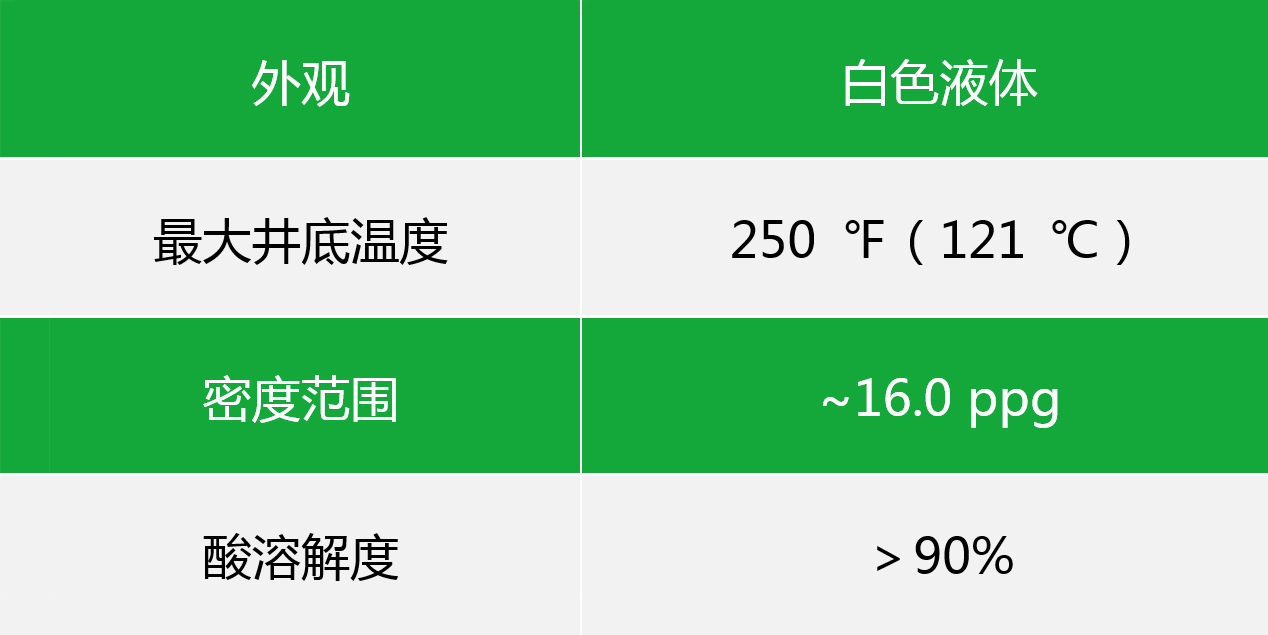
产品规格
技术优势
触变剪切稀释凝胶;
可自主定制释放时间;
快速部署,易于布置(单趟);
在释放之前减轻流经区域漏失;
抗压强度高;
强化漏失区域,以满足钻井要求;
可安全用于生产区域;
可用作封隔塞,防止气体运移;
酸溶解度达到90%+。
案例研究
目前中东运营商面临的其中一个较大挑战是在油田碳酸盐岩井段(气顶)钻探8 1/2-in.井眼时如何降低环空漏失,麻烦的是漏失区域由各种裂缝通道网络连接而成。
通常情况下,现场人员会泵入一系列堵漏剂来降低漏失。如果持续漏失,则采用注水泥塞、侧钻或下封隔器等方法来阻止损失,但这些方法成本高昂且耗时较久。
虽然上述方法可以减缓这种漏失,但邻井数据显示,一旦恢复钻井、堵漏剂漏失掉或者开始侧钻,持续漏失的可能性很高。
贝克休斯设计了一种称为MAX-LOCK的堵漏材料,专门用于处理碳酸盐岩地层的这种裂缝。MAX-LOCK堵漏剂可以穿过裂缝挤入地层孔隙中,填充漏失区域中裂缝网的其他孔洞,因为一旦恢复钻探,可能仍然会钻遇这些孔洞。处理剂所具有的触变性能够在挤入裂缝后阻止进一步漏失。
一旦MAX-LOCK 堵漏剂“凝结”完毕,它就能保持一定抗压强度将漏失区域与井筒隔离开来,防止在恢复钻井后漏失区再次发生循环漏失。MAX-LOCK堵漏剂还具有酸溶性,可在完井阶段进行处理,最大限度地提高高渗透压裂带的储层产量。在这种情况下,作业人员可以用密度为10.7 ppg 碳酸钙加重KCl聚合物钻井液钻取这一井段。
钻井进度按照计划持续钻进,直到在5207英尺(1587米)的深度发现循环钻井液全部漏失。立即采取措施,保持气顶的静水压力水头,避免出现任何井控问题。在制备堵漏剂的同时,以60桶/小时的速度向环空中连续泵送密度为12.5 ppg泥浆帽。
当MAX-LOCK处理剂调配到平台时,已经泵入了三种常规堵漏剂。第三种常规堵漏剂帮助将漏失率从“完全漏失”降低到部分返回。
在实验室测试和模拟井下条件的基础上,BHGE人员建议使用55桶的MAX-LOCK处理剂,用于修复目标漏失区域,恢复钻井液循环。
该设计方案能够使MAX-LOCK堵漏剂有效处理所有漏失区域。首先上提钻柱到计算出的处理剂液面顶部,同时监测静态压力损失和液位变化。在堵漏剂顶部上方的两个立柱处循环的同时通过ECD压力将额外25桶处理剂挤压到漏失区。
按照钻井流程,将管柱拉出井眼调整底部钻具组合,同时等待MAX-LOCK处理剂 “凝结”。使用定向钻具钻入井眼内,冲刷至井底,无静、动态压力损失。钻到井底后,没有任何漏失,持续钻进至预定井深。由于堵漏剂凝固坐封到设定深度,因此使漏失量大大降低。
MAX-LOCK堵漏剂的成功应用,使作业人员能够快速有效地钻过棘手的漏失区域,而无需使用不必要的堵漏剂或使用水泥对储层造成破坏。
The MAX-LOCK lost circulation material (LCM) from Baker Hughes, a GE company (BHGE), is a magnesia-based material designed to mitigate severe or total loss of circulation. It is especially effective in vugular or cavernous formations, plug and abandonment operations, and in establishing sustained casing pressure.
Lost circulation is one of the major contributors to drilling nonproductive time nonproductive time (NPT). Conventional bridging materials are designed to cure seepage and partial losses, but these systems are often not enough to counteract severe or totally lost circulation incidents. Increased concentrations of conventional bridging agents to reduce extreme losses has long been a challenge, because the pressure requirements to pump could actually cause losses to increase. Combating severe or total losses by using cement plugs, while common, has also has caused problems such as increased NPT, difficulty obtaining the desired thixotropic fluids behavior, and poor cement bond.
MAX-LOCK LCM can set in and seal flowpaths that are many times larger than what conventional LCMs are capable of.
This prevents the downtime that cement jobs would require, and its thixotropic properties enable it to seal loss zones that cement cannot reach
Environmental information
The MAX-LOCK LCM has been evaluated in the BHGE drilling fluids’ bioassay program. The US EPA Drilling Fluids Toxicity Test resulted in minimal toxicity for 5.0 lb/bbl of the MAX-LOCK LCM in a generic #7 mud system. It also passes static sheen and oil and grease standards for offshore Gulf of Mexico use. For additional information concerning environmental regulations applicable to BHGE drilling fluids’ products, contact the Health, Safety, and Environmental Department.
Safe handling recommendations
Use normal precautions for employee protection when handling products. Read safety data sheet prior to use.
Packaging
The MAX-LOCK LCM includes up to seven components, packaged in 25-lbm or 50-lbm sacks or in 55-gal drums.
MAX-LOCK? lost circulation material (LCM) is a magnesia-based, phase-transformation fluid technology that is easy to place downhole across a loss zone. It demonstrates thixotropic behavior under downhole conditions, and is customizable to set and form a high-compressive-strength plug to combat a severe lost circulation incident. Typical applications include lost circulation in vugular or cavernous formations, plug and abandonment, and in remediation of sustained casing pressure.
MAX-LOCK LCM is a high-strength, acid-soluble system designed to operate in conventional temperature environments, while providing an alternative to a conventional cement plug. The system tolerates water-based (WBM)/oil-based (OBM) mud contamination.
Key operational considerations
MAX-LOCK is recommended where severe lost circulation events occur and other conventional LCM materials fail. Several factors should be considered during planning and execution:
Estimate MAX-LOCK pill volume needed based on the loss scenario
Customize LCM setting time by estimating the static and dynamic bottom hole temperature
Determine the fracture gradient to limit ECD across the weak zone
Estimate equivalent ECD against the weak zone while pumping spacers and MAX-LOCK pill
Evaluate QA/QC of product and water analysis to further verify pill performance
Evaluate the effect of contamination on MAX-LOCK setting time and compressive strength
Advantages of MAX-LOCK LCM include:
Thixotropic shear thinning gels
Customizable setting time
Rapid deployment and easy to place (single trip)
Resists flow through loss zones before setting
High compressive strength
Strengthens loss zones to enable drilling
Safe to use in production zones
Can be used as an isolation plug to prevent gas migration
High acid solubility, 90%+
Applications
?Operations with a potential for severe or total loss of circulation
? Applications where acid solubility is critical
? Areas where gas migration is a concern
? Plug and abandonment operations
? Zonal isolation, casing repair, or other environmentally-sensitive operations
Features and benefits
? Thixotropic shear thinning gels
? Easy to pump through bit
? Prevents gas migration
? Resists flow through loss zones before setting
– Strengthens loss zones
? Enables drilling to section target depth
? Can function as an isolation plug
? High acid solubility, 90% or greater
? Safe to use in production zone
? Rapid deployment
? Can be pumped from slug tank
? Eliminates unnecessary trips
? Reduces NPT
? Customizable setting time
? Avoid pumping more than necessary
? Minimizes risk associated with flash setting
? Increases chances of bridging across loss zone
? High tolerance to contamination
? Allows variation with mix water
? Negligible deviation with setting time and strength with contamination
Case Study
A major Middle East operator faced many challenges in mitigating lost circulation while drilling the 8 ?-in. carbonate formation (gas cap) section of a field. The troublesome loss zone consists of vugs linked by networks of fracture channels.
Typically, the operator would pump a series of lost circulation material (LCM) pills to attempt to cure losses. If the losses persisted, cement plugs, side tracking and setting packers were all used to stop the losses ? all costly and time-consuming methods for eliminating downhole losses.
Although this type of loss zone can be mitigated with the methods mentioned, offset well data showed a high probability for the losses to increase once drilling resumed and/or the LCM pill was circulated out or sidetrack started.
Baker Hughes, a GE company (BHGE), designed the MAX-LOCK? lost circulation material for this very type of fractured, vugular formation. The MAX-LOCK LCM can be squeezed into the vugs and travel through the fractures to fill other vugs in the loss zone network that might have been encountered once drilling resumes. The thixotropic behavior prevents further flow through the loss zone after squeezing.
Once the MAX-LOCK LCM is “set,” it retains a compressive strength that isolates the loss zone from the wellbore and prevents lost circulation from occurring in the treated zone after drilling resumes. The MAX-LOCK LCM is also acid soluble and can be remediated during the completion phase to maximize reservoir output in highly permeable fractured zones. In this case, the operator drilled this section with a 10.7 ppg KCl polymer mud weighted with calcium carbonate.
Drilling commenced as planned until a sudden and total loss of circulation was observed at a depth of 5,207 ft (1587 m). Immediate action was taken to maintain hydrostatic head across the gas cap and avoid any well control issue. A 12.5 ppg mud cap was continuously pumped at 60 bbl/hr through the annulus while preparing LCM pills.
Three conventional LCM pills were pumped while MAX-LOCK chemicals were mobilized to the rig. The third conventional LCM pill aided in reducing the loss rate from “total losses” to a partial return.
Based on laboratory testing and simulating downhole conditions, BHGE personnel recommended 55 bbl of MAX-LOCK to cure the targeted loss zone and allow the operation to regain full circulation.
This engineered approach allowed the MAX-LOCK LCM to be spotted effectively across the loss zone. The drill pipe was then pulled to the calculated pill top. The static losses and displacement were monitored while tripping to the top of the pill and an additional 25 bbl was squeezed into the loss zone using the ECD pressure while circulating at two stands above the calculated top of the pill.
The MAX-LOCK pill was allowed to “set” while pulling out of the hole to change the bottomhole assembly as per the drilling program. The directional BHA was run into the hole, washing down to bottom with no static or dynamic losses. Once on bottom, drilling resumed without any losses to TD. The losses were fully abated throughout the liner running operation to desired setting depth.
This successful application of MAX-LOCK LCM enabled the operator to drill through a difficult loss zone quickly and effectively, without damaging the reservoir formation with unnecessary LCM material or cement.
按照客观、公正、公开的原则,本条信息受业主方委托独家指定在中国建设招标网 www.jszhaobiao.com 发布
注册会员 享受贴心服务
标讯查询服务
让您全面及时掌握全国各省市拟建、报批、立项、施工在建项目的项目信息。
帮您跟对合适的项目、找对准确的负责人、全面掌握各项目的业主单位、设计院、总包单位、施工企业的项目 经理、项目负责人的详细联系方式。
帮您第一时间获得全国项目业主、招标代理公司和政府采购中心发布的招标、中标项目信息。
标讯定制服务
根据您的关注重点定制项目,从海量项目中筛选出符合您要求和标准的工程并及时找出关键负责人和联系方式。
根据您的需要,向您指定的手机、电子邮箱及时反馈项目进展情况。