双涂层系统既有面子又有里子 全面保护海上资产-石油圈
| 所在地区: | 辽宁-- | 发布日期: | 2019年8月28日 |
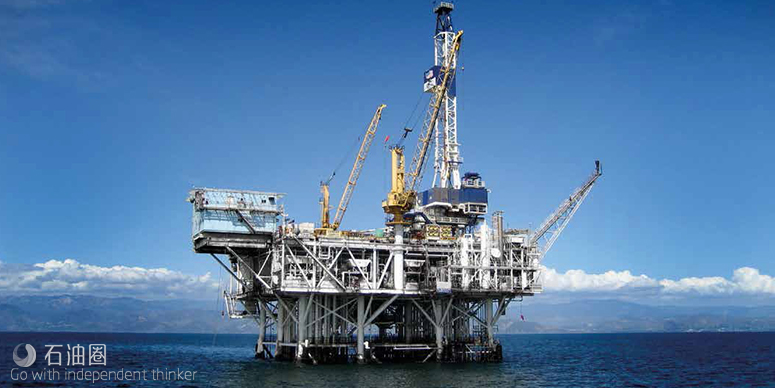
Hemptop Repel 800面漆与Avantguard 770底漆组成的双涂层系统,可延长维护周期,降低海上资产拥有者的维护成本。
编译丨TOM
由于恶劣的海洋环境与偏僻的位置,海上钢结构长期难以妥善维护,导致资产所有者的维护成本居高不下。在油气行业中,三层防腐涂层系统通常用于海上钢结构的维护。然而,这种系统经常会出现涂层过早失效的迹象。主要诱因是水穿透了涂层,应力造成了微裂纹与/或机械损伤。因此,维护变得更为频繁,大多数资产拥有者都在为积压的维护工作而束手无措。
涂料制造商Hempel公司最近推出了Hemptop Repel 800,这是市面上第一款体积防水涂料。本文分析了该涂料与活性环氧锌底漆Avantguard 770组成的双层涂层的性能。在大量测试中,与标准的海上三涂层系统相比,该防水双涂层系统的防腐性能有了显著提高,这表明它有潜力延长海上维护周期,降低海上资产拥有者的维护成本。
防水防腐蚀系统的优点
防水涂料长久以来一直是涂料工业的研究目标。通过主动将水从涂层表面排出,该防水涂层可显著改善防腐蚀性,从而延长维护周期,降低海上资产拥有者的运营成本。此外,本文分析的防水聚氨酯面漆作为双涂层系统的一部分,可确保对海上资产的长期保护,无需特殊应用设备即可轻松涂敷。与传统的三层涂层系统相比,涂敷该涂层系统所需的工时更短,可显著节省资产拥有者在维护作业期间的时间与费用。
接触角分析
接触角分析通常用于评估固体表面的拒水性。高接触角表示表面湿润性较低(即水滴不会在表面上扩散太多)。低接触角表示表面湿润性较高(即水滴会在表面扩散)。
将标准聚氨酯涂料与防水聚氨酯涂料应用于纸卡上,并进行接触角分析,以评价涂料的疏水效果。此外,为了评估涂层的体积疏水效果,用240目砂纸对涂层进行了研磨,再进行接触角分析。后者对于海上资产拥有者来说至关重要,因为它表明,即使涂层表面受损,涂层仍将保持高水平的防水性,油气行业中使用的钢结构经常会遇到这种情况。
标准聚氨酯涂层在磨损之前表面接触角为61.8°,研磨之后表面接触角为100°。相反,防水聚氨酯的表面接触角在研磨前为125.4°,研磨后显著增加至150°以上。这表明,与标准聚氨酯涂层相比,防水聚氨酯具有更疏水的表面以及更好的体积防水性。
盐雾试验
为了评价该防水聚氨酯涂层的耐腐蚀性,根据ASTM B117-16标准,对其进行了盐雾试验。为了形成对比,还测试了标准聚氨酯涂层。
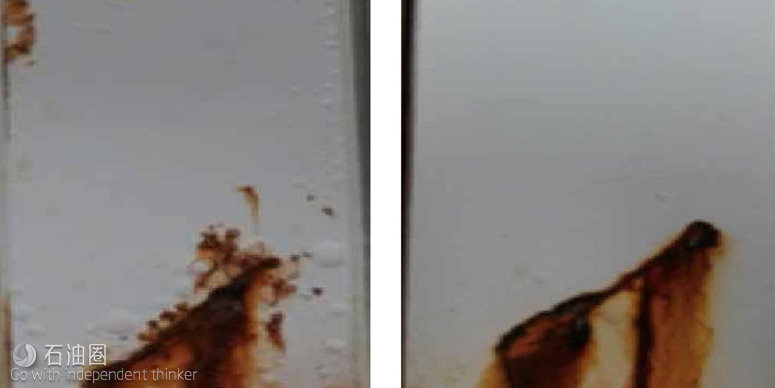
将标准聚氨酯涂料与防水聚氨酯涂料直接涂于金属表面,干膜厚度为120微米。结果如下图所示。768小时后,标准聚氨酯涂层显示出高度起泡。虽然没有观察到剥落或开裂,但涂层上也有微小的锈斑。防水聚氨酯涂层没有生锈、起泡、剥落或开裂的迹象。在防水聚氨酯涂层上,涂膜区域周围的蠕变线要小得多。然而,在1440小时后,两种涂层下都观察到微小的锈斑,这表明在长时间的暴露后,水分能够渗透到涂层中。
然后将该板暴露于盐雾试验6000小时,并在1000、3000、5000与6000小时后进行了测量。这项试验远远超出了1440小时的标准盐雾试验,这是非常值得的。
经过不同的暴露时间后观察金属板,评估起泡、开裂、生锈和/或剥落的程度,未发现可见缺陷。暴露6000小时后,腐蚀线小于1毫米,考虑到暴露时间较长,防腐效果相当突出。附着保持率为68%,最终附着力大于5Mpa,可以接受。
抗老化循环试验
根据ISO中12944:2018第9部分关于CX腐蚀性的测试方法,进行了抗老化循环试验。在规定的4200小时后,样品上没有发现起泡、开裂、剥落、锈蚀或任何其他可见缺陷。按照上述方法进行了延长测试。在7200小时与10080小时内,样品上没有发现起泡、开裂、剥落、锈蚀或任何其他可见缺陷。
起泡试验箱测试
根据ISO 6270进行起泡试验箱测试。将防水双涂层系统暴露于起泡试验箱测试7200小时,这是正常测试时间的十倍。在此期间,试验板没有出现起泡、生锈、剥落或开裂的迹象。与基准相比,试验板的POT值降低约35%,但仍被认为是可以接受的(高于6 MPa)。
热循环抗裂性
按照NACE标准第9章TM0404- 2004规定的条件,进行热循环抗裂性测试,但使用的是L形板而不是C形板。在60摄氏度下将试验板固化一周,然后每两小时经受60摄氏度至零下30摄氏度的温度变化,如此循环持续三周。在测试结束后,利用显微镜检查涂层是否开裂,特别是在通常观察到过度涂敷的拐角处。两块板都没有出现裂纹或其他缺陷。
由于可能具有过度涂覆的倾向,特别是在拐角处,因此本试验中涂层系统的干膜厚度为500微米。这比推荐的防水涂层干膜厚度高出2.5倍,而且测试结果表明,即使过度涂敷,该涂层系统仍能发挥出非常好的性能。
柔韧性测试
钢板的两面各涂上一层,固化两周。随后,将试样在60摄氏度下继续进行一周的固化,并使用固定半径的芯棒弯曲机测量相应的挠曲应变。将钢板弯曲到极限,该涂层系统并未发现裂纹。
试验表明,该涂层体系的弯曲应变为7%。与通常弯曲应变为1%至3%的标准聚氨酯涂层相比,这是一个巨大的进步,说明该涂层在受压下或移动后不太可能开裂。
总结
通过盐雾试验、循环抗老化试验、起泡试验、热循环抗裂性测试以及柔韧性测试,对防水双涂层系统的防腐性能进行了评价。结果表明,防水双涂层系统在较长时间的暴露下,仍能保持良好的防腐性能,适用于海洋油气平台等腐蚀性较强的环境。
此外,本文介绍的涂层系统比常规三涂层系统所需的涂层数更少,这使得涂敷作业更为快捷,一天内即可完成涂敷。
How can a new advanced water-repellent two-coat system extend maintenance intervals and reduce costs for offshore asset owners?
Due to the harsh marine environment and isolated location, offshore steel structures have long been difficult to maintain, leading to high maintenance costs for asset owners. In the oil & gas industry, three-coat anti-corrosive coating systems have traditionally been used for maintenance of offshore steel structures. However, these systems regularly show signs of early coating failure, primarily due to water ingress through the coating system, stress induced micro-cracking and/or mechanical damage. As a result, maintenance cycles are frequent, most asset owners struggle with a backlog of maintenance work, and maintenance costs – already high due to the difficulties of performing maintenance offshore – can become unsustainable.
Coatings manufacturer Hempel recently launched Hempatop Repel 800, the first volumetric water-repellent coating on the market. This article analyses the performance of this coating in a two-coat system with the activated zinc epoxy primer Avantguard 770. In extensive tests, the water-repellent two-coat system demonstrated significantly improved anti-corrosion performance compared to standard three-coat offshore maintenance systems, indicating that it has the potential to significantly extend maintenance intervals offshore and reduce maintenance costs for oil & gas offshore asset owners.
The benefits of water-repellent anti- corrosive systems
Water-repellent coatings have long been a target for the coatings industry. By actively repelling water from the coated surface, a water-repellent coating can significantly improve corrosion protection, thereby extending maintenance cycles and reducing operational costs for offshore asset owners. Additionally, the water-repellent polyurethane topcoat analysed in this article ensures long-term protection for offshore assets when used as part of a two-coat system, which can be easily applied without special application equipment. There is a significant saving by moving to a two-coat system due to the reduced number of man-hours needed to apply the system compared to conventional three-coat systems, saving asset owners time and expense during asset maintenance and repair work.
Evaluating the performance of the water-repellent polyurethane topcoats
For comparative purposes, a standard polyurethane coating and the water-repellent polyurethane coating were tested through contact angle analysis and a salt spray test applied direct to metal.
Contact angle analysis
Contact angle analysis is commonly used to assess how water repellent a solid surface is. A high contact angle indicates that the surface is low wetting (i.e. that the water droplet will not spread very much onto the surface). A low contact angle indicates that the surface is high wetting (i.e. that a water droplet will spread out across the surface).
The standard polyurethane coating and the water-repellent polyurethane coating were applied to paper cards and contact angle analyses were performed in order to assess the hydrophobic effect of the coatings. In addition, contact angle analyses were performed after abrading with 240 grit sandpaper in order to assess the coatings’ volumetric hydrophobic effect. The latter is extremely important for offshore asset owners, at it shows that the coating will maintain a high level of water-repellency even if the surface of the coating is damaged – a strong likelihood on a structure used in the oil & gas industry.
The standard polyurethane topcoat showed a surface contact angle of 61.8° before abrasion and a contact angle of 100° after it was abraded. In contrast, the surface contact angle of the water-repellent polyurethane was 125.4° before abrasion, increasing dramatically to above 150° after abrasion. This indicates that the water-repellent polyurethane has both a significantly more hydrophobic surface and greater volumetric water- repellency compared to a standard polyurethane coating.
Direct-to-metal salt spray test
In order to evaluate the corrosion resistance of the water-repellent polyurethane coating, it was exposed to a salt spray test according to ASTM B117-16 for a period of 768 hours and 1,440 hours. A standard polyurethane coating was also tested for comparative purposes.
Mild steel panels of rust grade A (ISO 8501-1) were abrasive blasted with iron grit. The surface of the panels had a roughness height (Rz) between 40μm and 55μm. The standard polyurethane coating and the water- repellent polyurethane coating were applied directly to the metal, with a dry film thickness of 120 microns.
The results are shown in figures below. At 768 hours, the standard polyurethane coating showed a high degree of blistering. There were also tiny rust spots on the coating, although no flaking or cracking were observed.
The water-repellent polyurethane coating showed no signs of rust, blistering, flaking or cracking. The creep line around the scribe area was considerably smaller on the water-repellent polyurethane. However, after 1,440 hours, tiny rust spots were observed under both coatings, indicating that moisture is able to penetrate the coatings after long exposure periods.
It is worth noting that salt spray tests of this type are not usually performed on single coatings due to the severity of the test. Instead, they are generally reserved for three-coat systems. In order to pass the test, a three-coat system of 280 microns must demonstrate less than 1mm rust creep around the scribe area after 1,440 hours of exposure. The water-repellent polyurethane coating saw rust creep of just 1.5mm after 1,440 hours, which is an extremely good performance for a single coating of 120 microns.
Evaluating the performance of the water-repellent two-coat system
The anti-corrosive performance of the water-repellent two-coat system was evaluated through salt spray, cycling ageing resistance, blister box, thermal cycling crack resistance and flexibility tests. The results show that the water-repellent two-coat system maintains its anti-corrosive properties for extended periods of exposure, making it a suitable for applications in aggressive corrosive environments, such as offshore oil & gas platforms.
The coating system used was:
Activated zinc epoxy primer
Water-repellent polyurethane topcoat
For the salt spray, cycling ageing resistance and blister box test, the dry film thickness of system was 280 microns (primer: 140 microns; topcoat: 140 microns). For the thermal cycling crack resistance and flexibility tests, the dry film thickness was increased to simulate over-application.
Extended salt spray tests
The water-repellent two-coat system was applied to metal panels. The panels were then exposed to salt spray tests for 6,000 hours, and measurements taken after 1,000, 3,000, 5,000 and 6,000 hours. It is worth nothing that this test goes well beyond a standard salt spray test of 1,440 hours.
The results are shown below. The panels were observed after different times of exposure in order to evaluate the degree of blistering, cracking, rusting and/or flaking. No visible defects were observed after the exposure times. After 6,000 hours of exposure, the corrosion line was less than 1mm, which is quite remarkable taking into consideration the extensive period time of exposure. The adhesion retention was 68% and the final adhesion is acceptable because it is greater than 5Mpa.
Ageing cycling resistance test
An aging cycling resistance test was performed according to the test methods in ISO 12944:2018 Part 9 for CX corrosivity. After the established 4,200 hours, no blistering, cracking, flaking, rust or any other visible defects were observed on the samples and the panels met the test requirements for this environment. Extended testing was also performed following the described method. Up to 7,200 and 10,080 hours, no blistering, cracking, flaking, rust or any other visible defects were observed on the samples.
As expected, the corrosion line increased with the time of exposure; however, rust creep slowed over time and the adhesion properties were not affected. In this test, a standard three-coat system would expect to see adhesion loss of 30-45%. The water-repellent two-coat system vastly outperformed this average; the adhesion properties of the panels maintained approximately 95% of their pre-test values.
Blister box test
A blister box test was performed according to ISO 6270. The water-repellent two-coat system was exposed to the blister box test for 7,200 hours – 10 times the usual test duration. After this period, the panels showed no signs of blistering, rusting, flaking or cracking. The panels showed a decrease of approximately 35% on the POT values when compared to the reference, but these are still regarded as acceptable (above 6 MPa).
Thermal cycling crack resistance
A thermal cycling crack resistance test was conducted under the same conditions as NACE standard TM0404- 2004, Section 9, but using L-shape panels instead of C-shaped profiles. The panels were post-cured at 60°C for one week and then subjected to upper and lower temperatures of 60°C to -30°C within a two-hour period for three weeks. At the end of the test period, the coatings were examined for cracking under a microscope, particularly at the corners where over application is normally observed. Neither prototype showed cracks or other defects.
As applicators can have a tendency to over-apply, especially in the corners, the dry film thicknesses of the coating system for this test was 500 microns. This is 2.5 times above the recommended dry film thickness of the water-repellent coating – and the performance indicates that the coating system will still perform extremely well, even if over-applied.
Flexibility tests
One side of the steel panels was coated and cured for two weeks. Afterwards, the test specimens were post- cured at 60°C for one week and the respective flexure strain was measured using a fixed-radii mandrel bending machine. The panels were bent over the mandrel with the smallest radius available. No cracks were observed in the coating systems.
The test demonstrates the coating system has a flexural strain of 7%. This is a significant improvement compared to a standard polyurethane coating, which usually has a flexural strain of 1-3%, and shows that the coating is unlikely to crack under pressure or after movement in the steel. This is a very important consideration for coatings used on offshore oil & gas structures, which are often exposed to high temperature fluctuations and movement within the steel.
Summary: High potential savings for offshore asset owners
Coating maintenance and repair can be extremely time-consuming and costly for offshore asset owners. The isolated location of offshore assets makes maintenance work difficult, while standard repair costs are often swelled by travel and accommodation expenses for maintenance crew. Any coating system that extends maintenance intervals will have a significant benefit for asset owners, as it will reduce the frequency of maintenance visits and associated operational costs. As demonstrated here, a two-coat system consisting of a volumetric water-repellent topcoat and with an activated zinc epoxy primer system has the ability to do just that.
In addition, the system discussed in this paper requires fewer coats than traditional three-coat systems. This makes the system faster to apply – the entire system can be applied in a single day – which can significantly reduce maintenance and accommodation expenses for asset owners.
按照客观、公正、公开的原则,本条信息受业主方委托独家指定在中国建设招标网 www.jszhaobiao.com 发布
注册会员 享受贴心服务
标讯查询服务
让您全面及时掌握全国各省市拟建、报批、立项、施工在建项目的项目信息。
帮您跟对合适的项目、找对准确的负责人、全面掌握各项目的业主单位、设计院、总包单位、施工企业的项目 经理、项目负责人的详细联系方式。
帮您第一时间获得全国项目业主、招标代理公司和政府采购中心发布的招标、中标项目信息。
标讯定制服务
根据您的关注重点定制项目,从海量项目中筛选出符合您要求和标准的工程并及时找出关键负责人和联系方式。
根据您的需要,向您指定的手机、电子邮箱及时反馈项目进展情况。