数字孪生:你以为的“前沿技术”,又被更新了!-石油圈
| 所在地区: | 江西-- | 发布日期: | 2019年9月6日 |
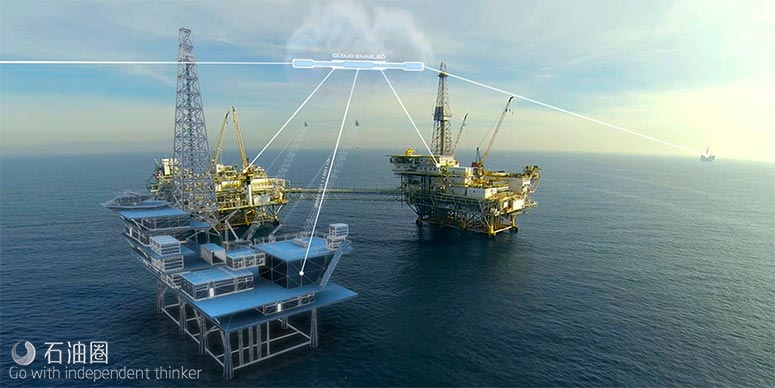
如今,越来越多的作业者使用数字孪生来管理资产性能,DNV GL公司提出概率数字孪生( Probabilistic Digital Twin, PDT ),以缩小数字孪生与风险分析(资产投入使用前,仍然主要是人工进行)的误差。
编译 | 二丫 TOM
在2019年9月5日的欧洲海洋大会上,DNV GL集团技术研发部门的油气项目主管Frank B?rre Pedersen博士与资深研发科学家Andreas Hafver博士提出了“概率数字孪生”的概念。
数字孪生是实物资产的数字“镜像”,包括其结构与动态模型,这些模型可结合多个数据源进行更新。它们为数据管理与决策带来了显著收益,提供了一致、准确的单一信息源。
风险模型很少被应用到实际作业中,它们通常分别存在于设计、作业与健康安全规程中,并且大多仅用于纸上谈兵,基于对历史数据的分析,只能提供潜在风险的静态图像。
实际上,风险是动态的,会随着作业条件与资产条件的变化而变化。然而,目前的风险模型并未捕捉到这种情况,这些风险模型很少更新,缺乏实时和预测能力。
DNV GL公司油气部门首席执行官Liv A.Hovem表示:“单一、非计划的停机事件每天可能耗费200万到500万美元,而更详细、更及时的风险信息则可以显著减少计划外或不必要的停机时间。”
“我们提出的概率数字孪生模型旨在将风险分析引入‘实时’应用中。创建出这种模型,将为现有的数字孪生增加一层概率风险分析,捕捉不确定性、新知识以及实际条件对作业性能与安全性的影响。”
她补充道:“通过提供更及时、更具体的资产风险图,PDT有助于作业者随时调整作业或采取预防措施,将风险保持在可接受水平。从而提高安全性,减少昂贵的停机时间。”
Frank B?rre Pedersen表示:“DNV GL公司着眼于未来,我们的用户都将拥有他们所有资产的数字孪生,鼓励他们在多个行业中使用该技术。目前,许多用户正在建立并维护他们资产的数字孪生。基于PDT技术,我们和我们的用户将能够利用这些数字孪生包含的所有信息,来提高风险评估能力。”
“概率数字孪生并不是一种替代品,而是数字孪生的进化版,将数字孪生扩展至风险分析领域。这是一种以数字化形式持续提供风险分析的新方式,可在日常决策中增加更多价值。”
PDT可以依靠可靠性和退化模型来预测机械组件的剩余寿命。但同时,它又不仅仅是一个预测性维护工具。实际上,风险不仅与组件故障有关,还与危险暴露和资产运营方式有关。通过将可靠性模型、危险暴露模型、出现问题的后果相结合,PDT可以最终描述出上述所有因素对安全性的整体影响。
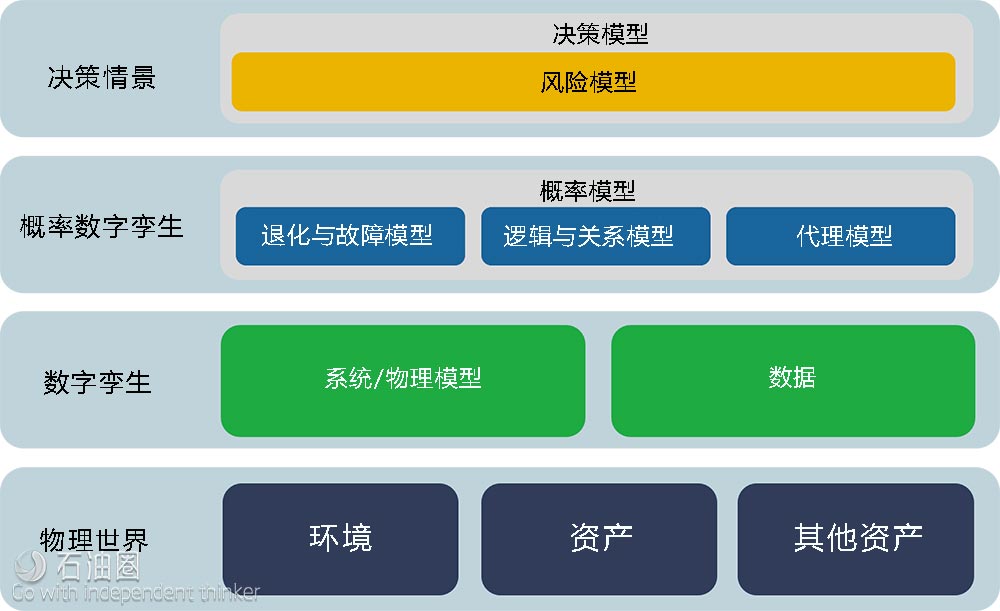
概率数字孪生与传统数字孪生的主要区别在于:
1.概率退化与故障模型:反映出影响性能并导致故障的不确定及可变条件和过程;
2.逻辑与关系模型:将性能变量与故障和损失事件联系起来;
3.代理模型:也就是快速近似模型,可快速查询,并实现不确定性和模型耦合的传播。
The Probabilistic Digital Twin concept was unveiled at Offshore Europe 2019 on Sept. 5 by Dr. Frank B?rre Pedersen, program director oil & gas at DNV GL’s Group Technology and Research unit and senior research scientist Dr. Andreas Hafver.
A digital twin is a digital “mirror” of a physical asset, including models of its structure and dynamics which are updated through a combination of multiple data sources. They bring significant benefits for data management and decision making, providing a consistent, accurate single source of information.
Risk models are rarely brought forward into operations—they typically exist separately within engineering, operations and health and safety disciplines—and are mostly used in desk studies, based on analyzing historical data and offering only a static picture of potential risks.
In reality, risk is dynamic, varying in time with operational conditions and the condition of the asset, but this is not captured by current risk models which are seldom updated and lack real-time and prediction capabilities.
Liv A. Hovem, CEO, DNV GL – Oil & Gas said: “A single, unscheduled downtime event can cost from $2 to $5 million per day – better and up-to-date risk information may significantly reduce unplanned or unnecessary downtime.
“Our proposed Probabilistic Digital Twin is designed to bring risk analysis into ‘live’ use. Their creation would add a layer of probabilistic risk modelling to existing digital twins, capturing uncertainty, the effect of new knowledge and actual conditions on operational performance and safety.”
“By providing a more up-to-date and asset-specific risk picture, a PDT allows operators to adjust operations or take preventive actions to maintain an acceptable risk level at all times. This will enhance safety and reduce expensive downtime,” she added.
“DNV GL is prepared for a future where our clients will have digital twins of all their assets, having encouraged their use in multiple industries. Many of our clients are building and maintaining digital twins of their assets. The PDT allows us and our clients to take advantage of all the information such twins contain to improve risk assessments,” said Frank B?rre Pedersen.
“The Probabilistic Digital Twin is not an alternative, but an evolution of the digital twin – expanding it into the risk analysis space. It is a new way of delivering risk analysis – continuously and in a digital format, adding more value in day-to-day decision making.”
A PDT may include reliability and degradation models to predict the remaining lifetime of mechanical components. However, it is more than a predictive maintenance tool. Risk is not only about component failures, but also about exposure to hazards and how the asset is operated. A PDT can say something about the overall impact on safety, by combining reliability models with models of the hazard exposure and the consequences if something goes wrong.
The main elements which distinguish a probabilistic digital twin from traditional digital twins are:
– Probabilistic degradation and failure models, reflecting uncertainty and variability of conditions and processes that affect performance and lead to failures.
– Logic and relational models, relating performance variables to failures and loss events.
– Surrogate models, approximating heavier simulation models, allowing fast queries and enabling propagation of uncertainty and model coupling.
按照客观、公正、公开的原则,本条信息受业主方委托独家指定在中国建设招标网 www.jszhaobiao.com 发布
注册会员 享受贴心服务
标讯查询服务
让您全面及时掌握全国各省市拟建、报批、立项、施工在建项目的项目信息。
帮您跟对合适的项目、找对准确的负责人、全面掌握各项目的业主单位、设计院、总包单位、施工企业的项目 经理、项目负责人的详细联系方式。
帮您第一时间获得全国项目业主、招标代理公司和政府采购中心发布的招标、中标项目信息。
标讯定制服务
根据您的关注重点定制项目,从海量项目中筛选出符合您要求和标准的工程并及时找出关键负责人和联系方式。
根据您的需要,向您指定的手机、电子邮箱及时反馈项目进展情况。