高效智能完井 eMotion-LV隔离阀大秀“遥控”技能-石油圈
| 所在地区: | 吉林-- | 发布日期: | 2019年9月7日 |
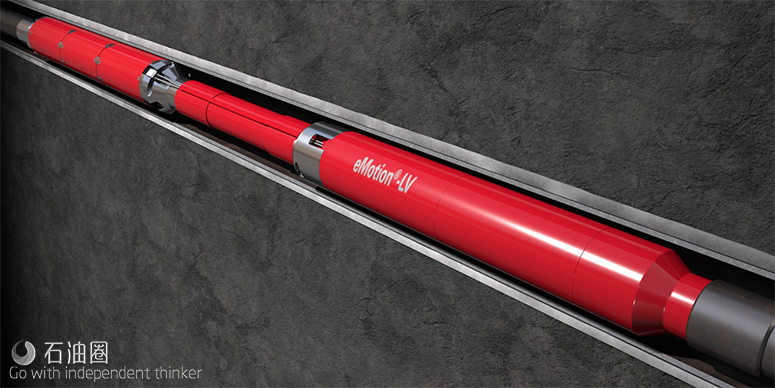
eMotion-LV阀门是一种由计算机控制的隔离阀,可以通过远程命令反复开启或关闭,无需任何地面控制线。它作为油管的一部分可永久部署在井下,在完井作业中用作全直径、可测试的屏障。
编译 | 影子
eMotion-LV阀主要由两个现有设备组成:eMotion井下控制单元和LV隔离屏障阀。eMotion控制单元直接连接到低压阀上的液压端口,提供地面通信和驱动动力;而LV隔离阀则可提供高达10,000 psi的屏障压力,且经现场进行了验证。
eMotion-LV隔离阀集成了压力和温度传感器,可用于监测井况,当检测到特定的条件(称为触发器)时,该阀就会自动开启或关闭。
触发器使用多种参数,包括外界压力、温度、时间或地面施加的压力。每次检测到触发条件时,eMotion-LV隔离阀就会按照指令打开或关闭。这个过程可以重复进行,而不需要任何形式的干预作业。
远程控制eMotion-LV隔离阀
通过在地面指定的时间内施加指定的压力,操作者可以激活压力窗口触发器。信号可直接传输到eMotion-LV隔离阀,因此可以实现远程操作。例如,持续施加1,000-1,500 psi的压力10分钟,可以指示打开闸门。施加任何在定义范围值之外的压力都将被eMotion-LV阀门忽略。这意味着可以对油管施加压力(用于油管完整性测试或封隔器坐封等),而不会有任何意外激活的风险。利用计算机终端的数据分析,eMotion-LV阀门可以将自身的指令与其他外部因素(如自然波动的静水压力或储层压力)区分开来,保证阀门即使在井下条件发生意外变化时也能够按计划工作。
eMotion-LV隔离阀门自动运行
还有一系列其他触发条件,包括井底压力、环境温度和时间。这些触发条件预先编制好顺序,使eMotion-LV隔离阀无需任何地面输入信号即可自动运行。每个触发条件可以单独运行,也可以组合使用来构建更复杂的指令。例如,当eMotion-LV隔离阀检测到压力低于2,000 psi时,它可以设置为关闭,但只能在井下超过100天后关闭。此外,压力窗口触发器可用于手动取消或覆盖任何触发条件,或将eMotion-LV隔离阀永久锁定在当前位置。
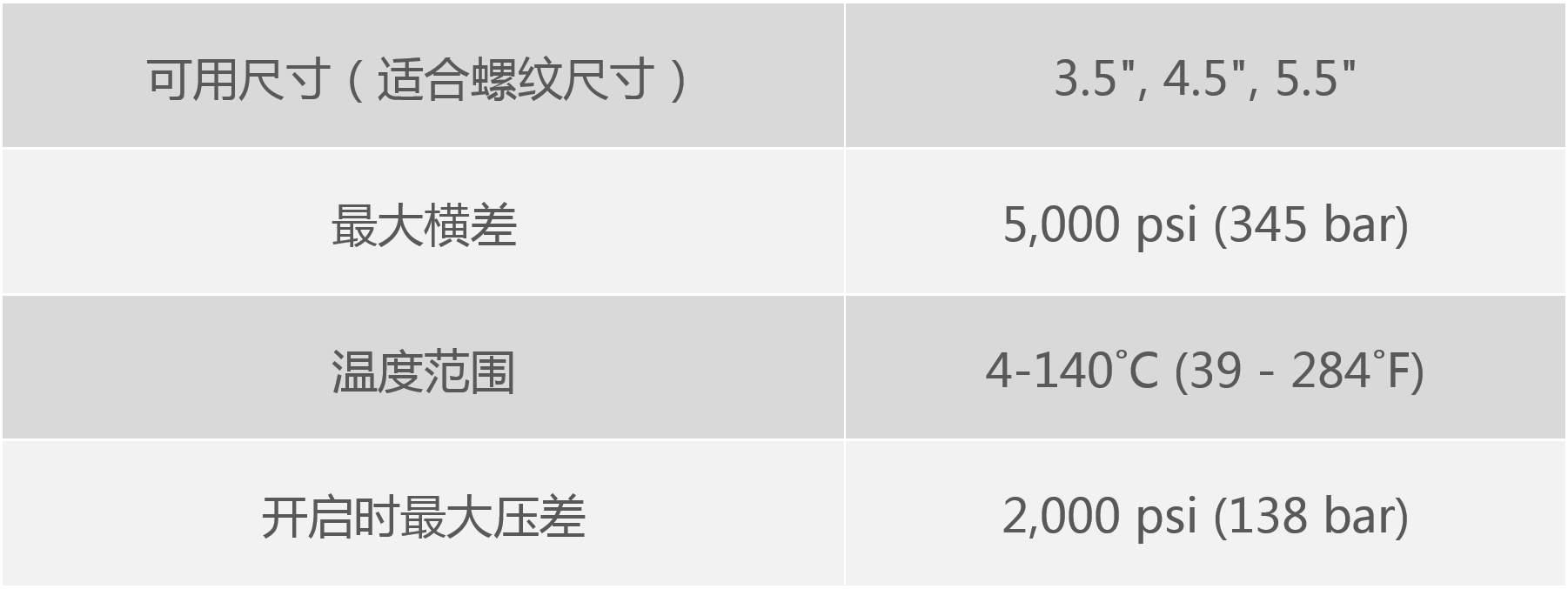
规格参数
技术特点
1.重复遥控使用;
2.电池寿命长;
3.可打开或关闭;
4.全井眼尺寸;
5.双向密封机理;
技术优势
1.在完井作业期间避免了多次电缆作业,节省了时间、金钱,并有助于降低风险;
2.运行至少10个月,可用于临时废弃作业或作为流量控制设备;
3.提供灵活的部署方案和井控方案;
4.提供最大的产量或注入量;
5.提供了一个完全可测试的井下屏障。
技术应用
eMotion-LV隔离阀特别适合在完井部署期间使用。为了获得最大的效益和工艺适应性,使用了两个eMotion-LV隔离阀。
第一个隔离阀部署在生产封隔器下方的完井管柱最低部位。它被部署于开启状态,可实现完井作业和井液循环,可以使用触发器控制它在任何时候关闭。当油管关闭时,可以对油管进行压力测试,并对生产封隔器进行水力坐封。
第二个eMotion-LV隔离阀位于油管悬挂器下方。也是部署在开启状态,虽然压力窗口触发器(在地面施加压力)提供了较大的灵活性,但同样也可以使用任何其他触发器关闭。一旦上部eMotion-LV隔离阀关闭,它可提供第二个可测试的屏障,这样无需防喷器就可以安装井口装置并安全测试。
即使没有井架在现场,这两个eMotion-LV隔离阀都可以远程控制重新开启。它们被永久地留在井下保持开启状态,为全井眼生产或注入提供最大的流量。使用eMotion-LV阀门,无需任何修井作业即可实施,节约大量成本,并有助于降低风险。
案例研究
Newfoundland和Labrador海岸的一个运营商想通过除去所有的干预措施来提高海底作业效率。哈里伯顿公司提议将eMotion-LV遥控隔离阀作为浅层隔离阀,以方便防喷器的拆卸和海底采油树的安装。eMotion隔离阀允许上部完井管柱在球阀打开的情况下正常运行。命令球阀关闭后,可形成第二个井下屏障,以方便拆除防喷器并安装海底采油树。通过压力信号远程打开阀门,打开可收回油管安全阀,以便进入储层。通过使用eMotion-LV隔离阀,直接节省了30多个小时的钻井时间,降低了HSE风险,与钻井时间相关的成本节约超过一百万美元。
加拿大的一家运营商希望提高海底完井部署的效率,采取的方案是在拆除防喷器和安装海底采油树之前,移除所有的干预作业,以便设置油井屏障。哈里伯顿公司提议将eMotion-LV远程控制隔离阀作为部署在浅层的隔离阀,以帮助拆除防喷器并安装海底采油树。这是eMotion-LV隔离阀的一个新应用,因为它之前主要用作封隔器的坐封装置。
这次应用将隔离阀用作浅层屏障,使其成为该技术迄今为止最重要的应用。与传统的作业方法相比,使用eMotion?-LV隔离阀直接节省了30多个小时的钻井时间,并降低了使用滑绳/钢丝绳进行干预作业的操作风险,降低了HSE风险。这是作业人员第一次安装eMotion-LV隔离阀,更是首次在加拿大安装,共节省超过1百万美元的钻井时间相关成本,实现了完井装置更高效的安装。
The eMotion?-LV valve is a computer-controlled, isolation barrier valve that can be repeatedly opened or closed by remote command. It is permanently deployed as part of the tubing where it is used as a full-bore, testable barrier during completion deployment operations.
It is actuated without the need for any surface control lines (saving tubing hanger penetrations) or interventions. Each time it is operated, an intervention is eliminated from the operation, dramatically reducing rig-time, costs and associated risks.
HOW IT WORKS
The eMotion-LV valve consists of two existing devices: the eMotion downhole control unit and the LV isolation barrier valve. The eMotion unit is directly connected to the hydraulic ports on the LV valve, providing surface communication and the motive force to operate it; while the LV valve provides a field-proven barrier rated up to 10,000 psi.
The eMotion-LV valve has integrated pressure and temperature sensors, which it uses to monitor the well conditions and is programmed to either open or close whenever a specified condition (known as a trigger) is detected.
The triggers use a variety of well parameters including ambient pressure, temperature, time or surface applied pressure. Each time a trigger condition is detected, the eMotion-LV valve will either open or close as per its instructions. This process can be repeated time-and-time again without any form of intervention.
Controlling the eMotion-LV Valve Remotely
By applying a defined pressure for a defined time at surface, the operator can activate the pressure window trigger. This allows direct communication to the eMotion-LV valve so it can be remotely operated. For example, applying between 1,000 – 1,500 psi for 10 minutes could instruct it to open. Any pressure applied outside the defined values will be ignored by the eMotion-LV valve. This means that pressure can be applied to the tubing (for tubing integrity tests or packer setting, etc.) without any risk of inadvertent activation. Onboard data analysis allows the eMotion-LV valve to distinguish its own commands from other external factors such as naturally fluctuating hydrostatic or reservoir pressure. This enables the valve to behave as planned, even if the downhole conditions change unexpectedly.
eMotion-LV Valve Autonomous Operation
A range of other triggers consisting of ambient well pressure, ambient well temperature and a timer are also available. These triggers are used to provide a preprogrammed sequence for the eMotion-LV valve to follow without any input from the surface. Each trigger can be used independently or combined to build more elaborate instructions. For example, the eMotion-LV valve could be set to close when it detects pressure below 2,000 psi, but only after 100 days downhole. In addition, the pressure window trigger can be used to manually cancel or override any trigger or permanently lock the eMotion-LV valve in its current position.
FEATURES
1.Remotely operated time-after-time
2.Long battery life
3.Run open or closed
4.Full-bore
5.Bi-directional sealing mechanism
BENEFITS
? Eliminates multiple wireline runs during completion placement operations – saving time, money and helping reduce risk
?Operational for at least 10 months – for use in temporary abandonment operations or as a flow control device
?Provides flexible deployment options and well control
?Provides maximum production or injection flow rates
?Provides a fully testable downhole barrier
APPLICATION
The eMotion-LV valve is particularly suited for use during completion deployment. To gain the greatest benefit and flexibility, two eMotion-LV valves are used.
The first is positioned in the lowest part of the completion below the production packer. It is deployed in the open position allowing the completion to selffill and for well fluids to be circulated. It can be instructed to close at any time using one of the triggers. When closed, the tubing can be pressure tested and the production packer hydraulically set against it.
The second eMotion-LV valve is positioned just below the tubing hanger. This too is deployed in the open position and can be closed using any of the triggers, although the pressure window trigger (applying pressure at surface) provides the greatest flexibility. Once the upper eMotion-LV valve is closed, it provides a second testable barrier so the BOP can be removed and the wellhead installed and safely tested.
Both eMotion-LV valves can subsequently be remotely reopened, even without the rig on location. They are permanently left downhole in the open position, with the full-bore providing the maximum flow rates for production or injection.
Using the eMotion-LV valves instead of conventional barriers allows the entire operation to be carried out without any form of intervention – providing substantial cost savings and helping to reduce risk.
Case Study
Offshore Newfoundland and Labrador, a major operator wanted to increase the efficiency of their subsea operation by removing all interventions. Halliburton proposed the eMotion?-LV remotely operated isolation barrier valve as a shallow-set barrier to facilitate the removal of the blowout preventer (BOP) and installation of the subsea tree. The eMotion-LV valve allowed the upper completion to be run with the ball open. The ball was then commanded to close, creating a second well barrier to facilitate the removal of the BOP and installation of the subsea tree. The valve was then remotely opened via pressure signal, and the tubing-retrievable safety valve was opened in order to allow access to the reservoir. The use of the eMotion-LV barrier valve resulted in 30+ hours of direct rig-time savings and reduced HSE risk, with cost savings associated with rig time in excess of $1MM.
A major operator in Canada was looking to increase the efficiency of their subsea completion deployment by removing all intervention operations in order to set well barriers prior to removing the BOP and installing the subsea tree.
Halliburton proposed the eMotion-LV remotely operated isolation barrier valve as a shallow-set barrier to facilitate the removal of the blowout preventer (BOP) and installation of the subsea tree. This was a new application for the eMotion-LV valve, since it has primarily been used as a packer-setting device.
The eMotion-LV valve allowed the upper completion to be run open. The ball was then commanded to close, creating a second well barrier to facilitate the removal of the BOP and installation of the subsea tree. The valve was remotely opened via pressure signal, and the tubing-retrievable safety valve (TRSV) was opened to allow access to the reservoir.
This application used the valve as a shallow-set barrier, making it the most significant application for the technology to date. Use of the eMotion?-LV barrier valve over conventional intervention methods resulted in 30+ hours of direct rig-time savings and reduced the operational risk of intervening with slickline/wireline, reducing the exposure to HSE risk. This first eMotion-LV valve installation for the operator, and first installation in Canada, created a more efficient completion installation with direct cost savings associated with rig time in excess of $1MM.
按照客观、公正、公开的原则,本条信息受业主方委托独家指定在中国建设招标网 www.jszhaobiao.com 发布
注册会员 享受贴心服务
标讯查询服务
让您全面及时掌握全国各省市拟建、报批、立项、施工在建项目的项目信息。
帮您跟对合适的项目、找对准确的负责人、全面掌握各项目的业主单位、设计院、总包单位、施工企业的项目 经理、项目负责人的详细联系方式。
帮您第一时间获得全国项目业主、招标代理公司和政府采购中心发布的招标、中标项目信息。
标讯定制服务
根据您的关注重点定制项目,从海量项目中筛选出符合您要求和标准的工程并及时找出关键负责人和联系方式。
根据您的需要,向您指定的手机、电子邮箱及时反馈项目进展情况。