Ocean Power的自主监测技术可提高弃置封堵井的安全性。
编译 | 惊蛰
近日,Ocean Power技术公司(OPT)宣布其在北海成功为Premier石油公司部署了PB3 PowerBuoy,提高了作业效率和安全性。
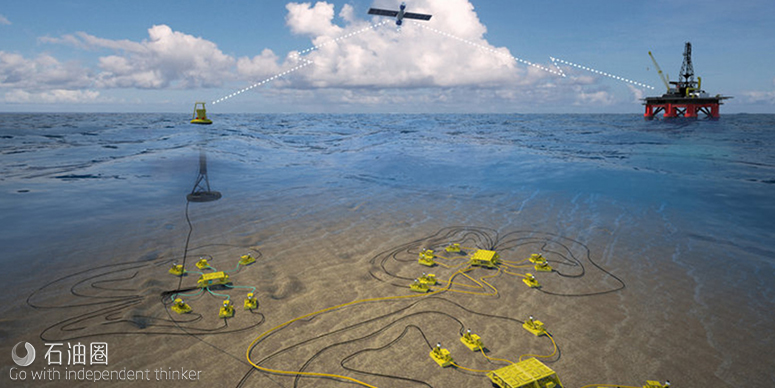
此次最新部署的PB3 PowerBuoy作为Premier公司的自主智能平台,为北海中部Huntington油田提供通信与远程监控服务。在部署期间,Premier公司展示了PB3 PowerBuoy功能,它能够监测本地环境,并可向位于油田安全区的船只发出警报。作为备选方案,在将来它还可协助进行退役相关的作业。
根据设计,维护间隔为每三年一次。PB3的控制与管理系统包括自我监控数据收集、处理和传输,有助于采取主动的维护策略,从而提高可用性与作业效率。
此次部署应用持续时间9个月,但前提是在前3个月需符合若干验收标准。该项目得到位于阿伯丁的油气技术中心的支持,该中心为PowerBuoy的监测需求提供了联合资助、支持以及技术投入。
Premier公司的英国业务部门经理Paul Williams表示:“我们很高兴能在我们运营的Huntington油田试用PB3 PowerBuoy。这是一次证明新技术的绝好机会,它将使我们能够最大程度地减少退役计划对环境的影响,同时保持灵活性,以最大程度地提高油田的经济效益。如果该项目取得成功,我们未来会探讨在英国以及其他地区,将该技术部署到其他资产以及用于不同目的的可能性。”
Ocean Power技术公司总裁兼首席执行官George H. Kirby表示: “我们很高兴PB3 PowerBuoy能为Premier公司的弃置封堵作业贡献一份力量,该设备为监测作业提供了可靠的自主解决方案。此次部署得益于OPT团队与Premier公司紧密合作,在付出巨大努力与奉献后,所获得的成果。部署过程非常顺利,PB3 PowerBuoy按时到达目的地,并完全准备就绪。我们期待着向全球展示出PB3 PowerBuoy卓越的作业效率,证明PB3 PowerBuoy可以成为退役与海底油井监控的首选解决方案。”
OPT公司的PB3可以充当不间断电源(UPS),通过从波浪中收集能量,不断对其自身进行充电。它可以在指定地点进行海上部署、系泊与漂浮,并且能够应用于作业于水深20米至3000米的任何海域。
PB3可不间断向平台上或海床上的设备供电,同时还可向岸上设施提供远程实时数据传输与通信。PB3的尺寸与设计都是为了储存足够的电能,以在风平浪静时提供可靠的功率。
利用直驱发电机将波能转换为电能,该发电机不断地给平台上的电池组(电量存储系统)充电。电池组提供的电力可以满足设备与终端用户的需求。对于具有不同功率需求的设备(连续、较大的偶然峰值)而言,这尤其有利。
OPT公司设计PB3是为了将作业成本(OPEX)降到最低,并简化部署与回收需求,从而能够在海上作业中利用更多类型的船只。PB3可以被拖至现场,也可以从船只甲板上进行部署。
PB3技术应用于美国海军为海岸安全网络提供电力的项目,在严苛的海上环境中证明了其能力,包括在新泽西州沿海的作业经历了2011年的飓风艾琳。预计利用ISO海运集装箱来装运PB3的外部设备,在部署之前,仅需很少的现场准备工作,即可将外部设备安装在浮筒上。
Ocean Power Technologies announced the successful deployment of its PB3 PowerBuoy in the North Sea for its customer Premier Oil.
This latest deployment of a PB3 PowerBuoy will serve Premier as an autonomous intelligent platform to provide communications and remote monitoring services at Premier’s Huntington field in the central North Sea. During the deployment, Premier will demonstrate the PB3 PowerBuoy capabilities, its ability to monitor the local environment and alert ships of the field’s safety zone as a potential solution to help with their future decommissioning related operations.
This deployment begins a nine months lease, subject to meeting a number of acceptance criteria in the first three months. The lease also includes an option to extend the initial nine-month lease, as well as a purchase option. The project is backed by the Aberdeen-based Oil & Gas Technology Centre, which has provided co-funding, support and technical input to the monitoring requirements for the buoy.
Paul Williams, UK Business Unit Manager at Premier commented, “We are excited to be trialing the PB3 PowerBuoy at our operated Huntington field.? This is a great opportunity to prove new technology which will enable us to minimize the environmental impact of our decommissioning programs, while maintaining flexibility to deliver maximum economic recovery from our fields. Assuming success, we will look at the potential to deploy this technology on other assets and for different purposes, both in the UK and further afield.”
George H. Kirby, President and Chief Executive Officer of Ocean Power Technologies, commented, “We are excited to be supporting Premier in their decommissioning activities with our PB3 PowerBuoy, which delivers a reliable autonomous solution for surveillance and monitoring. This deployment is the culmination of the tremendous effort and dedication of the entire OPT team in close collaboration with Premier. The process of deployment went very smoothly, with the PB3 PowerBuoy reaching its destination on schedule and at full operational readiness. We look forward to demonstrating the superior operational effectiveness of the PB3 PowerBuoy to the world, demonstrating that the PB3 PowerBuoy can become the preferred solution for topside surveillance during decommissioning, and subsea well monitoring.”
OPT’s PB3 can act as an Uninterruptable Power Supply (UPS) which constantly recharges itself by harvesting energy from the waves. It is ocean-deployed, moored and floats over the point of use and can operate in any ocean depth over 20 meters and up to 3,000 meters (3 km).
The PB3 supplies power continuously to on-board payloads or equipment located on the seabed while also providing real time data transfer and communication to remote shore facilities. The PB3 is sized and designed to store sufficient electric energy to provide reliable “ride through” power in extended periods of flat-calm seas.
The PB3 supplies power continuously to on-board payloads or equipment located on the seabed while also providing real time data transfer and communication to remote shore facilities.
The conversion of wave energy into electric power is carried out through a direct drive generator that continuously charges an on-board battery pack (Energy Storage System). Power from the battery is delivered to meet application and end-user needs. This is particularly advantageous for applications that have varying power requirements including continuous and larger occasional peaks.
OPT has designed the PB3 to minimize operational costs (OPEX) whereby deployment and recovery thereof is simplified, leveraging vessels widely employed in offshore marine operations. The PB3 can be either towed to site or deployed from a vessel’s deck.
Maintenance intervals, by design, are every 3 years. The PB3 control and management system includes self-monitoring data collection, processing and transmittal to allow pro-active maintenance strategies, thus increasing availability and operational effectiveness.
The PB3 technology was demonstrated for a US Navy project to provide power to coastal security networks and survived rigorous sea trials, including operation off the New Jersey coast through Hurricane Irene in 2011.? Exterior payloads are anticipated to be shipped in the ISO shipping container and would require minimal on-site preparation to mount on the buoy prior to deployment.
点赞