通过地震勘探技术的革新,结合现有设施的应用,BP实现了桶油成本的降低!
编译 | 惊蛰
在油气行业忙于降低成本时,英国石油公司(BP)正在收获其地震勘探成像技术革新带来的回报。近日,BP宣布其在墨西哥湾又发现了四个储量巨大的油藏,而且可以使用附近的平台开发,桶油成本显著降低。
这些处于不同发展阶段的发现将帮助BP将墨西哥湾的产量扩大至40万桶/天,当前产量为30万桶/日,新技术带来的效果可见一斑。
据悉,BP公司已经批准在亚特兰蒂斯(Atlantis)平台附近进行储量约为4亿桶油藏的海底开发。 这是Atlantis三期工程,将耗资13亿美元,把8口新井连接到位于新奥尔良以南150英里的平台上。BP计划在2020年将该项目投入生产,最高产量为38000桶/天,预计未来产量会继续增加。
此外,在BP的Thunder Horse油田附近,目前已经确定了另外10亿桶石油储量的油藏。BP表示,这两个项目都使用了一种称为全波形反演的方法,这是BP开发的新型算法,能够大幅加速地震成像庞大数据集的处理,分析时间从一年到缩短到几周。
在墨西哥湾的海上平台附近又发现了另外两个油藏,其开采也符合回接作业的条件,大大减少了生产所需的时间和成本。
而在一些合作项目中,Shell与BP合作的Manuel项目中发现的高品质砂岩油藏能回接至BP的Na Kika平台。在BP与Kosmos Energy、Ridgewood Energy合作的项目中,利用其先进地震勘探技术发现的Miocene区块也能实现与BP的 Delta House平台回接。这些发现都将最大化利用现有设施,实现开采成本的降低。
新区块的开发通常需要使用回接技术,因为实际上这些区块中可开采的只是储量的一小部分。除此之外,在已有的旧平台上添加新井,也可以避免新平台的巨大成本,并且利用现有设施在继续保持其工作能力继续运行。而这一切的基础则建立在地震勘探技术的进展上,发现新的油藏才有可能实现现有设施最大化利用、提高产量的目的。
BP首席执行官Bernard Looney表示:“这些油田还很年轻,到目前为止,我们在墨西哥湾地区投资开发的油藏中只有12%的储量得到了有效开采。我们看到了许多进一步发展的机会,有可能在未来十年的中后期继续创造巨大价值。”
地震勘探技术进步
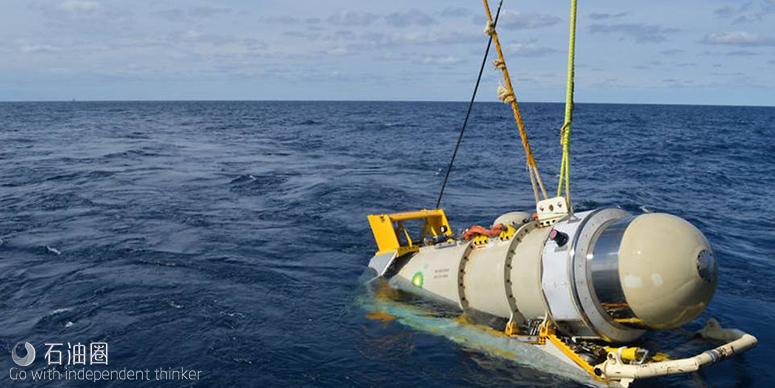
地震勘探技术长期以来一直是BP的研究重点,BP计划使用能够产生超低频声波的全新声源部署新的勘探系统,Wolfspar就是BP技术研发的主要成果之一。
Wolfspar地震声源利用活塞产生声波,其频率明显低于气枪产生声波的频率。BP开发了这种新设备,得益于这些超低频声波提供的精确成像数据,BP获得了开发墨西哥湾厚盐层下方储层所需的数据。BP的地震勘探技术专家表示,此类油藏的发现利用传统的气枪声波源是不能做到的。
在以往的作业中,使用气枪产生的低频率声波信号不能解决由厚岩层引起的问题,无法有效发现下层的油气藏。目前其他主要石油公司也在努力开发类似的声源,BP率先完成了技术的革新,在勘探中已经大规模使用Wolfspar声源。
“利用BP专有的Wolfspar地震采集源,在Mad Dog油田进行了成功的现场试验后,目前正计划对Thunder Horse和Atlantis平台附近的油藏进行进一步更为先进的海底节点地震成像,,以更好地了解油藏。”
在2007-2015年间,BP设计、制造和现场测试了Wolfspar,这是一种针对全波形反演进行了优化的全尺寸超低频震源。像气枪或海洋振动器一样,在低频模式时,Wolfspar源的振幅下降约为18 dB/倍频程。然而,Wolfspar与气枪的不同之处在于,它可以精确地定制输出满足优选速度模型构建算法全波形反演(FWI)的需要。
此外,Wolfspar源还精确记录其辐射波场,该信息可用于反演算法的建模步骤。虽然产生的功率远远低于大型气枪阵列,但这种新型震源产生的能量效率更高。以4节的速度对拖曳源进行现场测试,记录到海底传感器中,在墨西哥湾深水区域实现了出色的信噪比,偏移超过30 km,频率低至1.6 Hz。尽管在如此低的频率下存在显着环境噪声,但并没有影响结果。BP希望在拖曳时可以降低频率,但这还需要进一步的测试。
众所周知,声波频率越低,问题就变得越简单。建模表明,使用当前的FWI算法,如果能够在30 km偏移处记录低至约1.4 Hz的信号,那么许多现有的模型构建挑战在算法上会更易于处理。但不幸的是,在给定声功率水平下制造地震信号的难度与频率成反比。
因此,相比于10Hz,1Hz声波产生的难度不是10倍,而是1000倍。更糟糕的是,地球环境本身在几赫兹以下的声波场迅速变得嘈杂。结合这两种效应,BP发现,当试图获得低于约4 Hz的数据时,数据信噪比迅速下降。在大多数情况下,业界已经将努力投入到该问题的算法解决方案中,因为即使能够产生2Hz以下的声波,设备的制造也很困难。
总之,BP在低频率地震勘探技术中迈出了领先的一步,Wolfspar在实际应用中为BP带来了显著的收益,这非常符合开发商低油价时期对降低成本的需求。利用该技术,可以更充分的利用现有设施,最大程度的降低桶油成本,提高产量。
BP is reaping the rewards of its focus on advanced seismic imaging, announcing four significant additions to its oil resources in the Gulf of Mexico, which can be developed using nearby platforms.
The discoveries, which are at various stages of development, will help BP expand production in the Gulf of Mexico to 400,000 b/d, up from 300,000 b/d currently.
BP has approved subsea development of 400 million bbl of oil in place near its Atlantis platform. The $1.3 billion project, Atlantis Phase 3, will tie back eight new wells to the platform located 150 miles south of New Orleans. BP plans to bring the project on line in 2020 with peak production of 38,000 b/d, and future developments are expected.
Another 1 billion bbl of oil in place “has been identified” near BP’s Thunder Horse field. Both projects used a method known as full waveform inversion, using algorithms developed by the company to speed processing of the huge datasets used for seismic imaging from a year to a few weeks, BP said.
Two other discoveries were made near platforms in the Gulf of Mexico, which will also allow tiebacks, significantly reducing the time and cost required to put them into production.
A discovery in the Manuel prospect in Mississippi Canyon can be tied back to BP’s Na Kika platform. The reservoir is described as a “high-quality Miocene sandstone.” BP’s partner on the project is Shell.
Another find was made on the Nearly Headless Nick prospect, which has a similar Miocene pay. Production there would likely be via a tieback to the Delta House platform owned by LLOG, which is a partner on the project with BP, along with Kosmos Energy and Ridgewood Energy.
Tieback opportunities are often required to produce many finds because only a fraction of the oil in place will actually be produced. Adding wells to an older platform avoids the huge cost of a new platform and allows an older facility to continue operating near capacity as the original wells age. Seismic advances will help it maximize production from its acreage.
“These fields are still young—only 12% of the hydrocarbons in place across our Gulf portfolio have been produced so far. We can see many opportunities for further development, offering the potential to continue to create significant value through the middle of the next decade and beyond,” said Bernard Looney, BP Upstream chief executive.
Seismic Advances
Seismic has long been one of a handful of key research targets for BP. It plans to deploy new systems using a totally new sound source capable of generating ultra-low-frequency sounds, with nodes on the seafloor to record the data.
The Wolfspar seismic sound source uses a piston to create sounds concentrated at frequencies below what can be created using air guns. BP developed the new device because those ultra-low- frequency sounds provide the data required to accurately image reservoirs beneath the thick layers of salt in the Gulf of Mexico, which air guns cannot, according to a description in a recent SPE presentation by a BP expert.
The air guns commonly used do not produce enough signals at those frequencies to solve the problems caused by salt.
While other major oil companies are working to develop similar sound sources, BP said it has been using the Wolfspar sound source in the field.
“Following a successful field trial at the Mad Dog field, further advanced seismic imaging with ocean bottom nodes, and BP’s proprietary Wolfspar seismic acquisition source, is being planned for Thunder Horse and Atlantis to better understand the reservoirs,” BP said in its announcement.
Beginning in 2007 and continuing into 2015 BP designed, built, and field tested Wolfspar?, a full-scale ultra-low-frequency seismic source optimized for full-waveform inversion. Like airguns or marine vibrators, at low frequencies the Wolfspar source declines in amplitude at about 18 dB / octave. However, Wolfspar differs from airguns in that it can tailor its output precisely to the needs of our preferred algorithm for velocity model building, full-waveform inversion (i.e., it is “FWI friendly”). The source also precisely records its radiated wavefield and this information can be used in the modeling step of the inversion algorithm. Although producing much less power than a large airgun array, this new source is more efficient with the energy it produces. Field-testing the source under tow at 4 knots, recording into ocean-bottom sensors, we achieved an excellent signal-to-noise ratio in the deep water Gulf of Mexico at offsets of over 30 km and at frequencies as low as 1.6 Hz despite the significant ambient noise at these frequencies. We expect that lower frequencies will be possible while under tow, but this has not yet been tested.
It is well known that “the lower the frequency, the easier the problem becomes”. Modeling indicates that with current algorithms, if we could record signals down to ~1.4 Hz at 30 km offsets, many existing model-building challenges should become algorithmically tractable. Unfortunately, the difficulty of making a seismic signal at a given acoustic power level scales with inverse frequency cubed. Thus, 1 Hz is not 10, but 1000 times more difficult to make than 10 Hz. Worse, the Earth itself rapidly becomes noisier below a few Hz. Combining these two effects, we find that as we attempt to obtain data below about 4 Hz, our signal-to-noise rapidly decreases. For the most part, the industry has put their efforts into an algorithmic solution to the problem, on the assumption that producing and operating a device capable of making usable signal-to-noise below 2 Hz would just be too difficult.