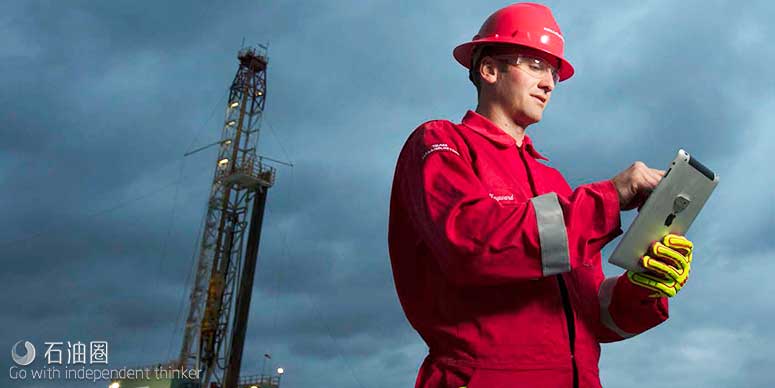
一套永久性的监测设备,能够提供准确、可靠、经济的多点温度传感和压力传感数据,将油井监测水平向前推进了一大步。
编译 | 周诗雨 影子
11年前,没有人知道智能手机是什么;而今天,我们已经无法想象缺少了智能手机的生活会变得多不堪。智能手机在带给人们无尽的便利之外,其相关的第三方应用程序,已经快速对现有的很多技术产生了冲击。消费电子技术的飞速进步、电子电路的发展、设备小型化以及在技术应用和使用上的修改完善,更进一步强化了这种冲击。
消费电子产品的发展,让油气行业也从中受益。服务公司开始研发出具有突破性的新型电子设备。总的来说,这些进步有益于解决方案的改进,更好地应对油气行业所面临的难题,例如提高高温下的可靠性和适用性、减少振动和冲击的影响等等。
自第一个产油井完工以来,行业先驱们就开始投资各种用于收集目标区块,或甜点区可靠信息的技术。随着电子技术可靠性的提高,油气行业目前使用有多种包含电子设备的工具。完井作业中的永久井下监测传感器已成为大多数地区的标配,因为它们能实时监测井的状况,从而实现优化油产量,降低水产量,进而提高采收率。一些政府在批准石油天然气开发之前,明确要求使用监测技术。而对于这些永久性的安装设备,能够长时间地保持可靠性是它们得以应用的首要前提。
哈里伯顿就深刻地明白创新技术制造新可能性的能力,他们一直致力于现有产品的不断改进。这是一款基于石英晶体的测量技术—ROC测量仪。该仪器可靠性强,精度高,即使在高达160 ℃的温度下,其偏差范围也是最小级别的。该仪器的新一代进化产品是DataSphere永久监控套件—它是一款能够实现从整个井筒采集数据的技术和解决方案。
如今,电子元件的体积越来越小,但功能却越来越强大。相应的,电子设备也变得更加紧凑和坚固。为了提高DataSphere套件在更高温度下的可靠性,哈里伯顿开发了多种专用集成电路(ASIC),并将陶瓷电容器换成了硅电容器。这些改进减小了尺寸和功耗,160 ℃以上的可靠性也得到了提高。
系统设计
哈里伯顿推出的DataSphere阵列系统,是第一款使用这种新型专用集成电路ASIC电子设计的产品。相比之前的3/4英寸,目前系统外壳尺寸只有5/8 in,是最轻薄的ROC测量仪器。这样,传感器就能下放在小井眼中。传感器是在工具制造过程中完成安装的,根据油公司选择的测试深度,同井下电缆一起,连接并焊到油管内导体壳。这种部署方法可以增加井下传感器的数量,帮助油公司更好地认识井筒。
一般来说,想要沿着完井井柱安装八个以上的压力和温度传感器是非常困难的,因为需要额外的钻机时间来安装电缆终端,并将它们连接到传感器。而哈里伯顿的技术则绕过了电缆终端和心轴,因此可以在不增加钻机时间的情况下部署更多的传感器。在测量压力和温度时,阵列传感器位于更靠近储层的环空中,这样可以在需要的地方与传统的套管ROC传感器结合使用。
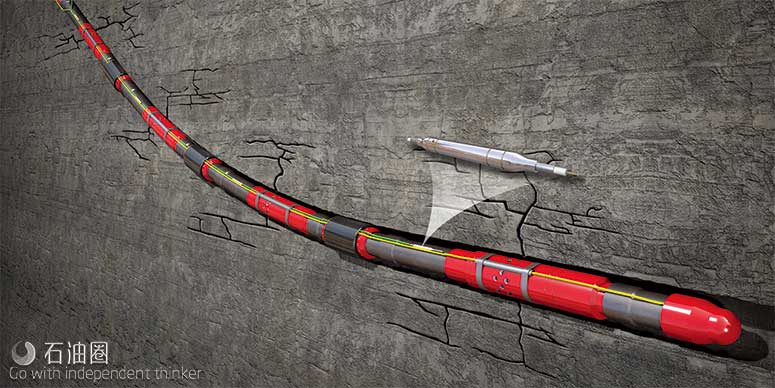
图1.DataSphere阵列系统绕过了电缆终端和心轴,因此可以在不增加钻机时间的情况下部署更多的传感器。
另一个好处是减少了钻井平台上激动压力所引起的潜在HSE风险。对于传统的仪表安装,仪表应使用电缆终端连接到TEC或钻台上的心轴,来帮助防止连接到TEC后管道的转动。在进行恰当连接后,油服公司应对连接进行压力测试。如果温度在日落时下降或在日出时上升,则这一过程需要较长的时间。而取消这些连接后,阵列传感器技术无需在钻台上进行压力测试。也不再需要进行多次连接而不断起下钻。因此,以前压力测试人员面临的HSE风险也就避免了。
阵列系统的安装不需要特殊的工具,其操作与常规控制线安装类似,包括交叉耦合控制器(CCC)。客户既可以选择在完井时对所有层段进行监控,也可以选择对某一层进行多点监控。在井况允许的情况下,建议使用膨胀封隔器系统对层段进行隔离。这样有助于防止完井时出现的相互干扰。该系统非常适合监测水力压裂,可以与光纤分布式温度传感(DTS)测量进行很好的协同工作。它可以与A型环空中的气举阀一起安装,用于气举优化。同时,非常适合在砂体表面进行安装,监控产量。与终端用户的协作有助于确保系统充分发挥其潜力。由于尺寸小、可适应性高,传感器可以根据需要或某些高难度的井眼,进行配置和生产。
阵列传感器部署
DataSphere阵列系统属于永久性监测,油公司可以在井中永久部署多达50多个压力和温度传感器。每个阵列的温度/压力传感器数量具有离散、实时、环形、井下分布式、多点等特性,并且传感器数量可根据需要配置。对于多级压裂,阵列可以使用基于光纤的DTS和分布式声学传感(DAS),来确定每个压裂段的生产效率。由于石英晶体技术的分辨率非常高,所获得的返排压力和温度数据在油公司的长期生产方案也可以使用,帮助提高回收率。
根据油公司的估计,用于海底砂体层面压力和温度的监控费用可高达1200万美元。而在阵列传感器的设计和安装中,不再需要心轴和终端,因此可降低设备投资,减少油公司的成本。此外在安装传感器时,还会节省钻机时间。除此之外,由于减少了干预措施和井调查作业,也降低了作业成本。而可靠,准确的井数据也提高了生产效率。对于深水井,阵列系统可适用于一些最具挑战性、最复杂的海上情况。当与分段控制阀结合使用时,还可以提高生产或注入效率。
第一个阵列系统作为产品认证过程的一部分,安装在了德克萨斯州卡罗尔顿的测试设施中。其完成的目标如下:
1.成功部署了温度传感器阵列;
2.使用实时温度传感器,验证了系统的机械完整性;
3.与温度传感器和压力/温度传感器的尺寸大小相当;
4.在起下钻过程中保持了与阵列传感器的通信,对整个安装过程和控制管线保护设备包进行了验证。
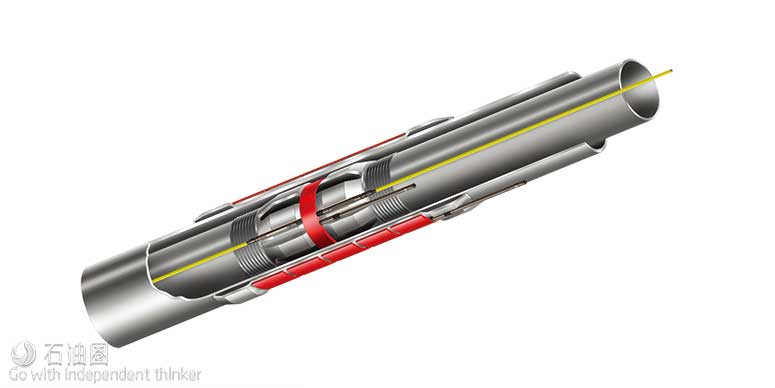
图2.使用测试井中的实时温度传感器获取的温度曲线。
测试井的结果非常成功,所有的目标都圆满完成;因此,该系统可以进行现场试验了。目前,哈里伯顿已经为多家油公司安装了多个系统,获得的反馈非常积极。
改进的传感器和可视化
为了进一步改善DataSphere套件,将在Opsis传感器内使用ASIC电子技术设计。该传感器将很快取代ROC仪表并提供标准的永久性监控,在更高的温度下,可靠性得到了提升。Opsis测量仪力求能够在高温下长寿、可靠。这将是哈里伯顿第一个遵循AWES推荐的井下电子设备实践所制造的永久性井下测量仪。
另一种具有颠覆性的DataSphere套件技术是LinX系统,它允许将传感器放置在套管外部。目前,基于井眼内的算法和测量数据点,可以根据强大的储层模型来估算储层压力。LinX电感耦合器的使用,可以为与地层直接接触的石英传感器提供电力并与之保持通信,从而获得井况条件下的准确、实时的数据。主要测量区包括储层、盖层岩石和层叠未开发的储层、上覆岩层或靠近井口的B或C型环空。
DataSphere传感器与完井工具油田可视化解决方案配合良好,该解决方案结合了Edge分析,油公司能够进行全面的压裂监测,并实时优化生产方案,获得即时结果。这些产品会把数据放在油公司唾手而得的地方。就像智能手机的发展一样,数据的可访问性和使用性是重要的部分。
提高效率/经济效益
DataSphere套件开启了新的监控可能性,提高了经济效益。哈里伯顿将阵列系统部署在观察井的套管上,然后进行原地固井,从而通过水泥监控,获得各个独立层段的压力读数。
这种水泥内监测方法,是针对套管后方监测LinX传感器开发的,现在已经成功移植到了阵列系统中。对于其他的情况,油公司可以采用阶梯式方法来安装这种套管后方水泥内部的阵列系统,来逐渐接受该产品。一旦接受,该技术可以部署在生产井中,用于提高每口井的长期效率。
Eleven years ago, no one knew about smartphones; today, we can hardly imagine life without them—there are endless benefits, functions and usages. This, combined with third parties installing applications on smartphone platforms, quickly disrupted existing technologies. Many companies were left with yesterday’s products. Rapid advancements, along with development of electronic circuits, miniaturization and modifications in how we apply and use the technology, furthered this disruption.
Advances in consumer electronics also benefit the oil and gas industry by allowing service companies to develop new, groundbreaking electronic-based devices. In general, advances facilitate solutions that could help meet industry challenges, such as increasing reliability at elevated temperature; improving serviceability; reducing the effects of vibration and shock; etc.
DOWNHOLE MONITORING
Since the first oil-producing well was completed, industry pioneers have invested in technologies meant to gather reliable information, in terms of the area of interest or “pay zone.” With advancing electronic technology reliability, the industry is now using multiple tools containing electronic devices. Permanent downhole monitoring sensors for a completion have become a standard requirement in most areas, because they monitor the well’s condition in real time and help increase the oil recovery rate by optimizing the oil output volume while reducing water production. Some governments mandate the use of monitoring technologies before sanctioning oil and gas development. For these permanently installed applications, reliability over time is the primary enabler.
A MORE RELIABLE METHOD
Halliburton understands that innovative technologies can create new possibilities for operators and continuously improve existing products, Fig. 1. Based on the quartz crystal measurement technology, ROC gauges demonstrate high reliability, excellent accuracy, and minimal drift at temperatures up to 160°C. The next step in this evolution is the DataSphere Permanent Monitoring suite—technologies and solutions capable of acquiring data from the entire wellbore.
Electronic components are becoming smaller and more powerful, translating to electronic devices more compact and robust with advanced capabilities. To increase reliability at higher temperatures for the DataSphere suite, the service company developed multiple application-specific integrated circuits (ASIC) and switched from ceramic to silicon capacitors. These improvements have reduced size and power consumption, and increased reliability above 160°C.
SYSTEM DESIGN
The company introduced the DataSphere Array system as the first product to use this new ASIC electronic design. It is packaged in a 5/8-in. outer diameter housing, compared to 3/4-in. for the slimmest ROC gauge. This allows these sensors to be placed in tight well constructions. As part of the manufacturing process, the sensors are connected and welded to the tubing-encased conductor (TEC) sheath at operator-selected depths along the downhole cable. This deployment method allows for an increased number of downhole sensors, providing operators with a better picture of the wellbore.
Traditionally, it has been a challenge to place more than eight pressure and temperature sensors along the completion string, because of the added rig time needed to make cable terminations and connect them to the sensor. By eliminating cable terminations and mandrels (Fig. 2), it is possible to deploy more sensors without adding to rig time. The array sensors measure pressure and temperature in the annulus space, closer to the reservoir, making it possible to combine with traditional tubing-ported ROC sensors, where needed.
Another benefit is the reduced potential HSE risks of working with trapped pressure on the rig floor. For conventional gauge installations, the gauge should either be connected using cable terminations to the TEC or to the mandrel on the rig floor, to help prevent turning the pipe after connecting to the TEC. After the appropriate connection is made, the service company should pressure-test the connection, which can take time if the temperature is declining at sunset or rising at sunrise. By eliminating these connections, the array solution removes the need to pressure-test at the rig floor; therefore, the potential HSE risk with people near a pressure test is eliminated for multiple connections while running in hole.
No special tools are associated with the array system to pick up and install on the tubing string; the operation is similar to installing regular control lines, including cross-coupling clamps (CCC). Array sensors provide an option to monitor all zones during the completion, or at multiple points in each zone. Swellpacker systems are recommended, when appropriate for well conditions, to isolate zones and help prevent any necessary splices along the completion. The system is well-suited to monitor hydraulic fracturing and works well with fiber-distributed temperature sensing (DTS) measurements. It can be deployed alongside gas lift valves in the A-annulus, used to optimize gas lift applications, and is ideal for deploying at the sand face to monitor production. Collaboration with the end-user helps ensure that the system is used to its fullest potential. Because of the small size and high resilience, sensors can be configured and delivered where needed, and in some of the most challenging wellbore regions.
ARRAY DEPLOYMENT
The DataSphere Array system is a permanent monitoring system that enables the operator to permanently deploy 50+ pressure and temperature sensors in the well. Each array provides a configurable number of discrete, real-time, annular, downhole distributed, multi-point temperature and/or pressure sensors. For multi-stage fracturing, the array can be deployed with the fiber-optic-based DTS and distributed acoustic sensing (DAS), to determine production efficiency of each stage after stimulation. Given the high resolution of the quartz crystal technology, flow backpressure and temperature data can be used in an operator’s long-term production strategy to increase recovery.
Monitoring pressure and temperature along the sand face in a subsea well could be worth up to $12 million, according to operators. The sensor array design and deployment method reduce operator cost by lowering equipment investments, because a mandrel and terminations are not needed. It also saves rig time when installing the sensors. This comes in addition to lower operational costs because of a reduced number of interventions and well surveys, and the increased production efficiency enabled by reliable, accurate well data. For deepwater applications, the array system can withstand some of the most challenging and complex offshore scenarios. It can enhance production or injection efficiency when combined with interval control valves.
The first array system was installed in a test facility at Carrollton, Texas, as part of the product qualification process. The completed objectives are as follows:
Successfully deployed a temperature sensor array
Verified mechanical integrity of the system, using live temperature sensors
Replicated the size of both the temperature sensor and the pressure/temperature sensor
Validated the installation procedure and control line protection package by maintaining communication with the array while running in hole, and while pulling out of hole
Detected differences in temperature profile while circulating fluid, as depicted in Fig. 3
Demonstrated system compatibility with two different sheave wheel designs
Tested the surface acquisition equipment with the array in real time.
The test well was successful, and objectives were accomplished; thus, the system was ready for field trials. Multiple systems have been deployed for various operators, and feedback has been positive.
IMPROVED SENSORS AND VISUALIZATION
To further enhance the DataSphere suite, an ASIC electronic technology design will be launched within the Opsis sensor, which will soon replace ROC gauges and provide standard permanent monitoring with increased reliability at higher temperatures. The Opsis gauge strives for longevity and reliability at high temperatures. It will be the first Halliburton permanent downhole gauge to follow the AWES recommended practice for downhole electronics.
Another disruptive DataSphere suite technology is the LinX system, which allows sensors to be placed outside the casing, Fig. 4. Currently, powerful reservoir models are used to estimate reservoir pressure, based on algorithms and measured datapoints within the wellbore. Using a LinX inductive coupler to provide power to, and communicate with, quartz sensors in direct contact with the formation, allows for accurate, real-time data on well conditions. Primary areas of measurement are the reservoir, cap rock, stacked untapped reservoirs, overburden, or the B or C annuli closer to the wellhead.
DataSphere sensors pair well with the Completion Tools Voice of Oilfield visualization solution that incorporates Edge analytics to enable operators to perform comprehensive frac monitoring, and optimize production strategies in real time, to deliver immediate results. These products put data at the operator’s fingertips and in their offices. Just like the smartphone evolution, accessibility and data usage are the important pieces—what good is more data if it is difficult to work with, takes too long to decipher, or the sensors are placed in the wrong location?
The industry needs a quick, user-friendly interface with proper analysis to make sense of the data. Speed and clarity are fundamental when detecting frac hits and resolving the resulting damage. By installing array sensors in nearby wells to understand frac interference, operators can model fracture interaction across the field for more accurate forecasting and rate estimation. Additionally, long-term drawdown pressure and temperature data can be fed into the rate-transient analysis algorithms to optimize flow regimes and recommend various asset optimization techniques. Combining comprehensive frac monitoring, better rate estimation, and optimized production rate, and using drawdown monitoring with digital innovations, can decrease costs and increase ultimate recovery.
INCREASED EFFICIENCIES/ ECONOMIC BENEFITS
The DataSphere suite opens new monitoring possibilities with added economic benefit. Operators indicate that pressure and temperature readings in optimal locations will suffice for increasing long-term production. For example, before gauges were installed in cemented applications, the industry viewed in-cement monitoring as possible, only when performed with explosive charges fired after the cement set. Halliburton proved this is not necessary and that monitoring within the cement is effective in retrieving reservoir pressure data. Hence, the array system has been deployed on casing in an observation well and cemented in place to provide individual zonal pressure readings while monitoring through the cement.
This method for monitoring in cement was developed for LinX sensors behind casing monitoring applications, and the methodology has been transferred successfully to the array system. For other cases, operators can use a staircase approach to product acceptance by installing the array system behind casing in cement. Once accepted, the technology could be deployed into production wells to enhance the long-term efficiency of each well.
CONCLUSIONS
The service company continues to advance technologies that optimize production and increase overall recovery. The DataSphere suite of permanent monitoring products takes well monitoring one step further by providing accurate, reliable, and cost-effective multi-point temperature and pressure sensing. Because operators continue to push for more information from their reservoirs, these sensors may revolutionize extraction of hydrocarbons from the reservoir.