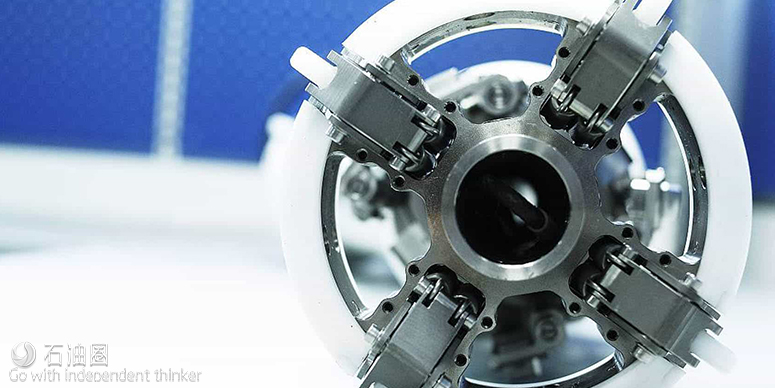
Oceaneering利用放射技术,推出了无损检测方案,为油气作业提供了新的思路!
编译 | 惊蛰
Oceaneering公司为油气行业推出了一种新型数字放射成像技术,名为Trip Avoidance X-ray Inspection系统,简称TAXI,旨在减少意外的停机次数。
作为今年SPE海上成就奖创新类别的最终入围者,TAXI解决方案代表了工业放射成像技术的跨越式发展。放射成像技术通常使用伽马射线同位素放射源,这扰乱了压力容器与设备上的核子液位控制仪器,造成“跳闸”,导致昂贵的计划外停工以及相关的过程安全风险。
TAXI解决方案赋予Oceaneering技术人员更高的操作灵活性,能够对装有核子探测器的设备上或压力管道等设施进行数字放射成像。可以在设备服役期间进行该工作,仅需使用一个专门的系统来发出脉冲X射线。
该工艺经过现场验证,可提供最佳的无损检测(NDT)方案,帮助检测腐蚀、管道变薄以及潜在的完整性损失。该技术还可确保设备的连续运行,显著降低压力容器泄漏(LOPC)及相关安全风险,并最大限度地延长设备正常运行时间。
该解决方案符合2017年颁布的电离辐射条例(IRR17),因此不需要进行设备的核辐射隔离。它可以减少检查作业次数,从而提高设备效率,并通过消除因“跳闸”导致计划外的停机,大幅节省了成本。此外,它还可以对通常无法进入的系统(如小直径管道)进行现场检查。
Oceaneering公司辐射学专家Jim McNab说:“作业者经常推迟作业计划,停工后才会进行放射成像检查,除此之外的检测方法大多效率较低。这是因为迄今为止还没有一个安全可靠的解决方案,能够在设备运行期间,在核子附近,进行设备与管道系统的放射成像检查。基于此,我们为油气行业客户开发出一种高效可靠的解决方案,这将进一步增强其设施的完整性。该方案的灵感来源于安全与国防部门使用的X射线系统。”
?“我们的TAXI解决方案适用于检测与监测绝缘层下的腐蚀状况(CUI),这是北海60%管道故障的主要原因。根据以往的作业经验,CUI难以检测与测量,而且,拆除绝缘材料以检查腐蚀迹象可能是昂贵的、耗时的,有时甚至没有必要。”
Oceaneering公司与设备供应商以及核子仪器制造商密切合作,共同开发设计出Taxi系统。目前其已经部署在北海的几个平台,作为Oceaneering检测产品的一部分提供。
Oceaneering公司的资产完整性业务包括:完整性的分析与维护、风险管理、传统与先进的无损检测(NDT)、专业检测方案等。该团队拥有2100名技术人员,为全球24个地区的客户提供服务。该公司是一家全球性的工程服务与产品供应商,主要面向海洋能源行业。通过运用其应用技术专长,Oceaneering公司还可为国防、可再生能源以及航空航天行业提供服务。
TAXI系统
使用经过现场验证的TAXI系统,可在核子控制仪器附近进行安全的放射成像,从而避免设备停工。设备安全生产时间最大化:辐射通常会扰乱压力容器上的核子液位控制仪器,造成“跳闸”,导致停工,增加了过程安全风险。TAXI系统提供了一种安全的替代方案,使Oceaneering的检查员能够对带有核子液位控制器的设备进行射线成像。
管道中的腐蚀失效造成的压力容器泄漏(LOPC)事故,是作业者无法接受的。这类事故通常是由于绝缘下的腐蚀(CUI)。TAXI系统已经经过现场验证,是当前最佳的无损检测(NDT)解决方案,以检测腐蚀与完整性损失。
?“我们的设备不需要特殊隔离,避免了过程控制盲点,最大限度地延长了设备的正常运行时间。最重要的是,消除了突然中断带来的任何风险。该系统适用于老化的设备,因为这些设备的检验已经被推迟了许多年,并且它可有效、经济地用作为例行或计划检查作业的一部分。”
TAXI系统的关键优势:
- 及早发现管道腐蚀与壁厚损失;
- 避免意外停机;
- 降低设备故与压力容器泄漏风险;
- 对工艺操作控制没有影响;
- 延长正常运行时间;
- 准确提供绝缘下的腐蚀评估。
Oceaneering International, Inc. (“Oceaneering”) has launched a new digital radiography solution for the oil and gas sector, the Trip Avoidance X-ray Inspection (TAXI?) system, aimed at reducing the number of unplanned shutdowns.?
Recognized as a finalist at this year’s SPE Offshore Achievement Awards’? “Innovator” category, the TAXI? solution represents a step-change in industrial radiography operations. Typically, radiography uses gamma radiation emitting isotopes. This upsets nucleonic level control instrumentation on pressure vessels and equipment, causing “trips” that result in costly unplanned plant shutdowns and associated process safety risks.
The TAXI solution enables Oceaneering’s technicians to digitally radiograph pressure piping and infrastructure associated on, or around, equipment fitted with nucleonic detectors. The work can be carried out while the plant is in-service, using a specialized system that delivers pulsed X-rays.?
The field-proven process provides the optimal non-destructive testing (NDT) solution to detect corrosion, pipe thinning and potential loss of integrity. It ensures continuous operations – significantly reducing the risk of loss of primary containment (LOPC),? associated safety risks and also maximizes plant uptime.?
The solution complies with Ionising Radiation Regulations 2017 (IRR17), and does not require plant nucleonics isolation. It can reduce deferred inspections, resulting in increased plant efficiency and also provides significant cost savings by eliminating unplanned process shutdowns caused by trips. In addition, it enables in-service inspection of normally inaccessible systems, such as small-bore piping.
Jim McNab, Radiation Methods Subject Matter Expert at Oceaneering, said, “Operators often defer radiography inspections into planned shutdowns or rely on less effective inspection methods.? This is because, until now, there was no safe, reliable solution to enable equipment and piping systems to be radiographed in the vicinity of nucleonics while the plant is live. We were compelled to develop an efficient and reliable solution for our oil and gas customers that would provide further confidence in the integrity of their facilities; and took inspiration from X-ray systems used within the security and defense sectors.
“Our TAXI? solution is suitable for detecting and monitoring corrosion under insulation (CUI), a major issue attributed to around 60 percent of the North Sea’s piping failures. CUI is difficult to detect and measure, and removing insulation to inspect for signs of corrosion can be costly, time consuming and sometimes unnecessary.”
Oceaneering has worked closely with equipment suppliers and the manufacturers of nucleonic instrumentation to design the TAXI? system. Already deployed on several North Sea assets, it is available as part of Oceaneering’s inspection offering.?
Oceaneering’s asset integrity business delivers integrity, analytics, maintenance and risk management, conventional and advanced non-destructive testing (NDT) and specialist inspection solutions. The team includes 2,100 technically focused people, servicing customers from 24 global locations.
Oceaneering is a global provider of engineered services and products, primarily to the offshore energy industry.? Through the use of its applied technology expertise, Oceaneering also serves the defense, entertainment, renewables and aerospace industries.
Trip Avoidance X-ray Inspection (TAXI)? System
Perform safe radiography near nucleonic control instrumentation and avoid plant shutdowns with our field-proven (TAXI)? system.?
Safely Maximize Plant Uptime
Radiation typically upsets nucleonic level control instrumentation on pressure vessels, causing ‘trips’ that result in costly plant shutdowns and increased process safety risks. The TAXI system provides a safe alternative, enabling Oceaneering’s inspectors to perform radiography on installations with nucleonic level control instrumentation.
An unacceptable number of loss of pressure containment (LOPC) incidents are due to corrosion failures in piping, typically from corrosion under insulation (CUI). Our TAXI system is field-proven and provides the optimal non-destructive testing (NDT) solution to detect corrosion and loss of integrity.?
Our equipment doesn’t require plant isolation, avoids process control blind spots, maximizes plant uptime and most significantly, eliminates any risk from trips.?
It is beneficial for aging assets where inspection has been deferred for many years and can be used efficiently and cost-effectively as part of routine or planned inspection campaigns.?
Key benefits of the TAXI? system
- Early detection of pipe corrosion and wall thickness loss
- No risk of unplanned process outages or shutdowns
- Mitigates equipment failure risks and LOPC
- No impact on process operations control
- Higher plant and equipment uptime
- Provides accurate assessment of CUI